
Building Pad & Foundation Preparation in North Missouri
Professional building pad excavation, foundation preparation, structural grading, soil compaction, drainage correction, and rural site development for homes, barns, shops, and commercial builds across North Missouri. We prepare stable, properly graded construction sites designed to prevent settling, shifting, and drainage failure in real Missouri soil conditions.
Serving Chillicothe, Kirksville, Cameron, Trenton, Bethany, Moberly, St. Joseph, Maryville, Brookfield, Macon, and surrounding North Missouri construction sites and rural properties.
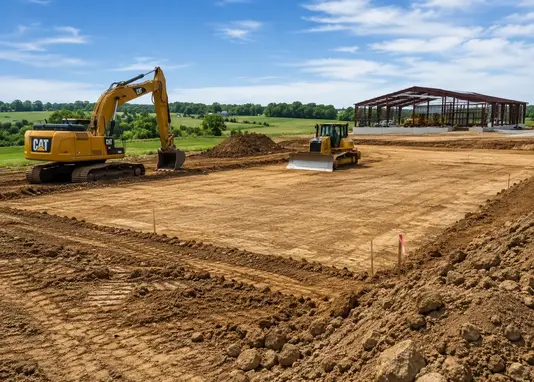
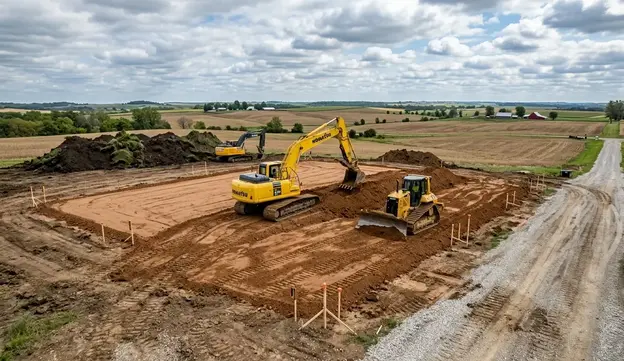
Proper building pad construction starts long before concrete arrives. Stable subgrade preparation, controlled compaction, drainage planning, and elevation management all work together to create a foundation that performs for decades.
Protecting builders, developers, and property owners on every job.
Experience with clay-heavy, flood-prone, and rolling terrain across the region.
We work with contractors, not against them, to keep schedules moving.
What Most Property Owners Don’t Realize Until After the Foundation Fails
Many people assume foundation problems come from bad concrete work. In reality, the failure usually begins long before the concrete truck arrives. It starts during pad preparation when the soil is treated as “good enough” instead of being tested, corrected, and stabilized.
The most expensive mistakes in North Missouri construction rarely show up during excavation. They reveal themselves 1 to 5 years later when the structure begins reacting to soil movement that should have been addressed before the build.
- Cracks forming even when the slab looked perfect on pour day Soil movement underneath creates stress the concrete was never designed to handle.
- Doors and windows shifting out of square Uneven settlement twists the frame and causes alignment issues throughout the structure.
- Water pooling around the foundation after normal rainfall Poor pad elevation and drainage planning allow water to collect where it does the most damage.
- One section of the building sinking faster than the rest Inconsistent compaction or hidden organic material creates weak zones beneath the slab.
- Freeze-thaw cycles lifting parts of the slab Moisture trapped in the soil expands during winter and pushes the structure upward.
These issues are not concrete defects. They are site preparation failures. Once the building is complete, correcting them becomes expensive, disruptive, and sometimes impossible without major structural repair.
Planning a New Building Pad or Foundation?
Most foundation issues start in the soil long before concrete is poured. We provide building pad evaluation, subgrade assessment, grading correction, and drainage planning across North Missouri.
Discuss Your SiteThe Real Science Behind Stable Building Pads in Missouri Soil Conditions
A properly built building pad is not defined by how level it looks. It is defined by how it distributes load, manages moisture, and resists seasonal soil movement. In North Missouri, these three factors determine whether a structure lasts 5 years or 50 years.
The biggest mistake in rural construction is treating soil like a static material. Soil behaves dynamically based on moisture content, freeze thaw cycles, compaction energy, and the mineral composition of the subgrade. Clay heavy soils in particular expand when wet and contract when dry, creating constant movement beneath a structure.
When we engineer building pads, we design them around three structural principles that directly control long term performance:
- Load distribution: spreading structural weight evenly across the pad to prevent stress points, slab cracking, and corner settlement.
- Moisture control: preventing water infiltration beneath slab or footing zones, which eliminates swelling, soft spots, and freeze thaw heaving.
- Density consistency: ensuring every lift of engineered fill is compacted uniformly so the pad behaves as a single stable mass instead of shifting in isolated areas.
Most pad failures occur because one of these three principles is ignored during site preparation. This is especially true in clay heavy soils common throughout North Missouri farmland, where even small mistakes in compaction or moisture management can lead to long term structural movement.
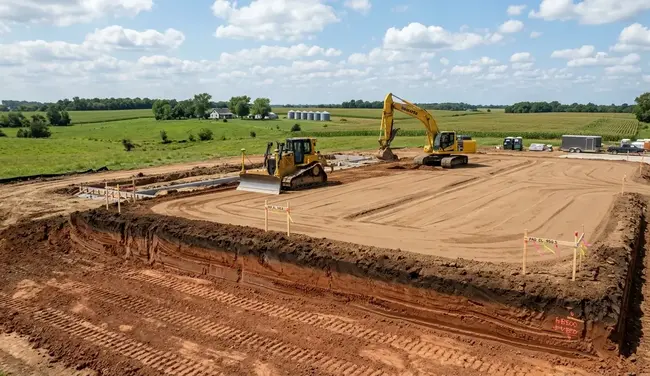
What Happens Beneath The Surface Determines Whether A Foundation Lasts
Most building pad failures begin below grade where property owners can’t see them. Proper site preparation involves removing organic material, stabilizing weak soils, placing engineered fill in controlled lifts, and shaping drainage so moisture never becomes trapped beneath the structure.
In North Missouri’s clay-heavy soils, long-term foundation performance depends on compaction quality, moisture control, and load distribution throughout the entire pad. The goal is to create one uniform, stable mass that resists settlement, seasonal movement, and structural stress for decades.
Why So Many Foundations Fail in North Missouri And What Actually Causes It
Across Daviess, Harrison, Gentry, Grundy, Livingston, Mercer, Nodaway, Caldwell, Clinton, and DeKalb counties, we see the same pattern over and over again: foundation problems that were completely preventable. The issue is rarely the concrete crew. The failure starts weeks earlier during site preparation when the soil is assumed to be stable instead of verified.
Hidden Topsoil & Organic Material
Buried topsoil, roots, and organics decay over time, creating voids that cause slabs to crack and corners to sink. We see this constantly in rural builds where the surface looks clean but the subgrade was never cut deep enough.
Pads Built in Natural Drainage Paths
Many sites “look level” but sit directly in the path of seasonal runoff. North Missouri’s rolling terrain funnels water in predictable ways. If the pad interrupts that flow, water will win every time, usually by eroding the foundation edge.
Clay Expansion & Seasonal Soil Movement
Our region’s clay expands when wet and contracts when dry. If the pad isn’t cut into stable material and compacted in controlled lifts, the structure will move with every season. This is the number one cause of sticking doors and cracked slabs.
Poor Moisture Conditioning During Compaction
Clay-heavy soils cannot be compacted correctly when too wet or too dry. Many pads fail because the contractor simply “packed it down” instead of moisture-conditioning each lift to achieve true density.
No Subgrade Verification Before Building
Without proof rolling, probing, or soil evaluation, soft pockets remain hidden until the structure begins to settle. This is one of the most common failures we see across rural home sites and barndominium builds.
Pads Built for Appearance Instead of Performance
A pad can look perfect on the surface and still fail. Smooth grading means nothing if the soil beneath it isn’t stable, compacted, and shaped to move water away from the structure.
Foundation failure rarely happens on day one. It shows up months or years later as cracking slabs, sinking corners, sticking doors, or water pooling along the foundation edge. These are all signs that the subgrade is moving, and once the structure is built, correcting the problem becomes expensive.
Proper site preparation is not costly compared to foundation repair. It is the single most affordable way to protect your entire build for decades.
Soil Conditions That Destroy Building Pads in North Missouri
Not all soil behaves the same under structural load. Across North Missouri, we consistently encounter soil conditions that must be corrected before any foundation work can begin. Surface appearance rarely reflects what is happening beneath grade.
The most common issue is high plasticity clay. This soil expands significantly when saturated and contracts during dry cycles. Without stabilization, this constant movement transfers directly into the structure above it and causes long term settlement and cracking.
Other high risk conditions include:
- Topsoil intrusion: organic material left in the pad zone that decomposes over time and creates voids beneath the structure.
- Hidden soft pockets: inconsistent density from past agricultural use, livestock traffic, or buried organic layers.
- Water entrapment zones: natural low points where runoff collects beneath grade and saturates the subgrade.
- Old field layering: uneven soil horizons created by decades of tilling, compaction, and equipment traffic that weaken load paths.
Each of these conditions must be identified during excavation, not assumed from surface appearance. Proper soil evaluation is the difference between a pad that performs for decades and one that begins failing within a few seasons.
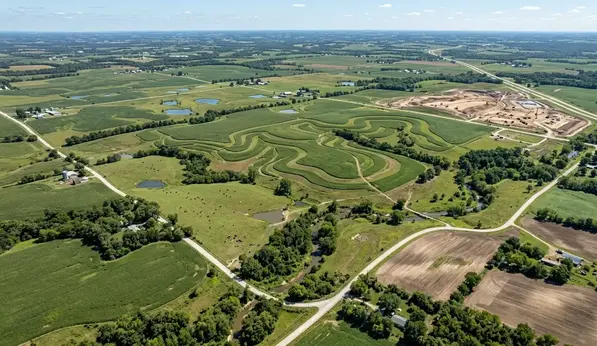
North Missouri terrain varies dramatically across short distances, with changes in elevation, soil composition, and drainage patterns that directly impact how building pads must be engineered.
Dealing With Unstable or Clay-Heavy Soil?
We specialize in North Missouri soil conditions including expansive clay, soft subgrades, drainage failures, and agricultural ground conversion into stable building pads.
Get Soil Evaluation HelpBuilding Pad Challenges We Commonly See Across North Missouri
Every county in North Missouri has its own soil behavior, drainage patterns, and elevation quirks. Contractors unfamiliar with these local conditions often treat every project the same, and that approach creates expensive problems that could have been avoided.
Gallatin and Daviess County
Rolling agricultural ground often requires extensive cut and fill balancing. Pads must be shaped with intentional fall to prevent water from tracking back toward the structure, especially on long slopes and terrace transitions.
Bethany and Harrison County
Heavy, high‑plasticity clay dominates this region. Pads here often need moisture conditioning, subgrade stabilization, and controlled lift placement to prevent seasonal swelling and shrinkage beneath the slab.
Trenton and Grundy County
Older farmsteads frequently contain buried organic layers, abandoned building sites, and inconsistent subgrade density. These areas require careful probing and removal to avoid long‑term settlement issues.
Maryville and Nodaway County
Large rural acreage developments often need long drainage planning, driveway access improvements, and elevation adjustments before a pad can be built correctly. Water movement across open ground is a major factor here.
Cameron and Clinton County
Many projects involve converting agricultural land into residential or commercial use. This typically requires substantial grading, ditch shaping, and drainage correction to create a stable building footprint.
Chillicothe and Livingston County
Low‑lying areas and natural watershed movement often dictate where a building can safely sit. Pads here must be elevated, drained, and shaped to avoid long‑term water intrusion and soil saturation.
Understanding local soil behavior is not something learned from a textbook. It comes from years of working on real properties across North Missouri and seeing firsthand how each county’s ground reacts under load, moisture, and seasonal change.
Why Property Owners Call Us Before They Buy Land
One of the most expensive mistakes a property owner can make is purchasing acreage before understanding what it will take to build on it. A property may look ideal from the road while hiding drainage problems, unstable soils, expensive fill requirements, or difficult access challenges that dramatically increase construction costs.
We regularly evaluate land before purchase so buyers understand the real site development requirements before committing to a property.
- Natural drainage and flood risk evaluation
- Soil stability and potential compaction concerns
- Equipment and future driveway access requirements
- Cut and fill requirements that affect construction costs
- Utility access considerations
- Best building locations on the property
Spending a few hours evaluating a property before purchase can prevent tens of thousands of dollars in unexpected site development costs later.
Buying Land for a Home or Building?
We help property owners evaluate drainage, soil stability, access, and cut/fill requirements before purchase so they understand true site development costs upfront.
Call Today (660) 371-5901How a Proper Building Pad Is Actually Engineered (Not Just Graded)
A true building pad is not created by leveling dirt. It is engineered through controlled excavation, material selection, compaction, and drainage design. Each step directly affects long term structural performance.
The process begins by stripping all topsoil and organic material. These layers are unstable and will decompose over time, creating voids beneath the structure if they are not removed.
The subgrade is then evaluated. If soil conditions are weak or inconsistent, it is undercut and replaced with engineered fill placed in controlled lifts and compacted to specification.
Compaction is not a surface pass. It is a layered stabilization process designed to eliminate air pockets, increase density, and ensure uniform load distribution across the entire pad.
The final step is shaping the pad with intentional drainage fall so water moves away from the structure instead of collecting along foundation edges.
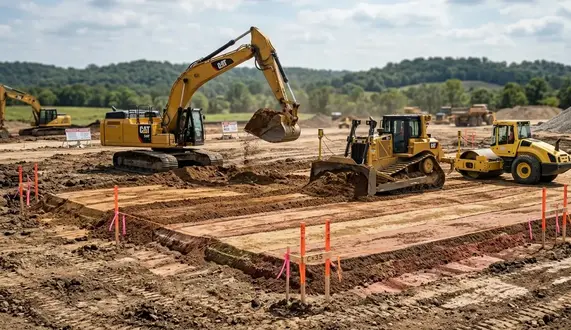
Engineered building pads are created through controlled excavation, fill placement, and compaction. Each layer is placed and compacted to specification to ensure uniform density and long-term structural stability.
Engineering Standards We Build Building Pads To (What Most Contractors Skip)
A proper building pad is built to performance standards, not visual standards. Every layer, lift, and moisture adjustment serves a structural purpose that directly affects long term stability. A pad that only looks level will fail. A pad that is engineered will not.
We approach each pad with a strict engineering sequence that ensures the soil behaves as a single stable mass under load.
- Topsoil removal to refusal depth: stripping all organic material until stable subgrade is reached, eliminating long term decomposition and void formation.
- Subgrade proofing: identifying weak zones, soft pockets, and moisture inconsistencies before any engineered fill is placed.
- Lift compaction method: placing engineered fill in controlled lifts and compacting each layer to specification for uniform density.
- Moisture conditioning: adjusting soil moisture to the optimal range so compaction energy produces maximum density and long term stability.
- Final proof roll evaluation: loading the pad with equipment to verify uniform support, identify deflection, and confirm structural readiness.
This engineering process ensures the pad performs as a single unified structure rather than a collection of uneven soil zones. When done correctly, it prevents settlement, slab cracking, and moisture driven soil movement for decades.
Foundation Types We Prepare For
Monolithic Slabs
Residential homes, shops, garages, and barndominiums requiring uniform support and controlled drainage.
Stem Wall Foundations
Projects requiring perimeter footings, elevated foundation systems, or specialized structural support.
Pole Barn Foundations
Pad preparation designed around post-frame construction and agricultural building requirements.
Barndominium Foundations
Large footprint pads requiring exceptional compaction, drainage planning, and long-term slab stability.
Commercial Building Pads
Retail, warehouse, office, and industrial construction requiring engineered site preparation.
Agricultural Structures
Machine sheds, livestock facilities, grain storage buildings, riding arenas, and farm operations.
Equipment & Capability Behind Every Building Pad
A stable building pad is not created with a single machine or a quick pass with a skid steer. True structural site preparation requires the right equipment, the right sequence, and the experience to know how each tool affects soil behavior, moisture, and long-term performance.
- Dozers for mass cut, fill, and structural shaping Heavy blades allow us to sculpt the site, establish proper elevation, and create the foundation geometry your structure depends on.
- Excavators for subgrade correction and trenching We remove unsuitable soils, correct soft pockets, and cut drainage paths with precision that only an excavator can deliver.
- Skid steers for fine grading and detail work Once the heavy shaping is complete, skid steers refine the pad, dial in slopes, and prepare the surface for compaction and final checks.
- Material hauling for engineered fill placement We bring in the right fill, remove unsuitable material, and manage moisture content so every lift compacts to the density your structure requires.
- Vibratory rollers and plate compactors for density control Proper compaction is the backbone of a stable pad. We use vibratory equipment to achieve uniform density across every lift, eliminating hidden voids and future settlement.
- Laser-guided grading for precision elevation control Laser systems ensure the pad meets exact elevation targets, drainage slopes, and structural tolerances that prevent water issues and uneven load distribution.
- Site evaluation tools for soil and moisture assessment Before any equipment moves, we evaluate soil type, moisture levels, and compaction requirements so the pad is engineered for long-term performance, not guesswork.
Every building pad we construct is the result of a coordinated process using the right machine at the right moment. This is not a one-size-fits-all approach. It is engineered site preparation designed to protect your structure for decades.
What We Look For That Most Contractors Never Mention
Most contractors can tell you how much dirt needs to move. Very few can explain how the ground will behave ten years after the building is finished. Long term performance is determined by what happens beneath the surface, not how the pad looks on grading day.
When we evaluate a future building site, we look for the indicators that reveal how the soil will perform under load, moisture, and seasonal movement long after construction crews leave.
- Natural water concentration zones that saturate after heavy rain and create long term instability beneath slabs and footings.
- Slope transitions and subtle grade breaks that redirect runoff toward the structure if not corrected during pad shaping.
- Organic soils, buried debris, and decomposing material that will collapse over time and cause settlement.
- Soil layering from decades of agricultural use that creates inconsistent density and hidden soft pockets.
- The most structurally stable building location on the property, not simply the flattest or most convenient spot.
- How water naturally wants to move across the land so the pad can be shaped to work with the terrain, not against it.
- Early warning signs of soil expansion, shrinkage, or saturation that will cause long term foundation movement if ignored.
Our goal is not just building a pad. Our goal is preventing the future problems that most contractors never see coming. A few hours of proper evaluation can eliminate years of headaches, repairs, and structural issues.
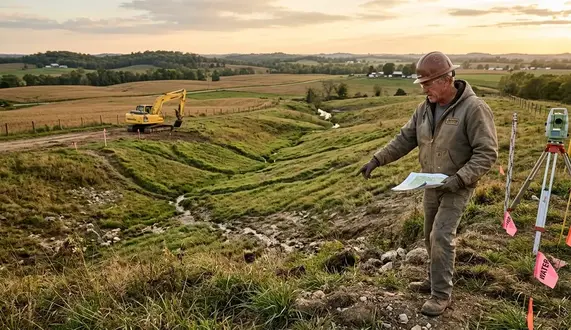
Every successful building pad begins with a proper site evaluation. Soil conditions, drainage flow, elevation changes, and access routes are analyzed before any excavation work begins.
Working With Engineers, Builders & Developers
High‑quality site preparation is a team effort. We work directly with structural engineers, home builders, commercial contractors, and development teams to ensure the ground performs exactly the way the design requires. Our goal is simple: eliminate surprises before they become expensive problems.
- We follow engineered grading, compaction, and foundation plans Every cut, fill, and lift is executed to match the specifications provided by your engineering team, ensuring the pad meets structural requirements from day one.
- We coordinate in real time as field conditions change Soil conditions rarely match the drawings perfectly. We communicate with builders and engineers on‑site to adjust the plan without compromising performance.
- We identify soil issues before concrete work begins Soft pockets, moisture zones, and unsuitable material are flagged early so they can be corrected before they become structural liabilities.
- We deliver inspection‑ready sites for the next phase Pads are finished to the elevations, slopes, and compaction levels required for inspections, ensuring builders can move forward without delays.
- We support multi‑phase development and commercial timelines From large‑scale grading to individual building pads, we keep schedules aligned with project milestones so crews can stay productive.
- We operate as a true partner, not just an equipment provider Builders trust us because we understand the bigger picture: structural performance, drainage strategy, long‑term soil behavior, and the demands of modern construction.
Whether you are building a single home, a commercial facility, or an entire development, we bring the communication, precision, and professionalism needed to make sure the ground is ready for what comes next.
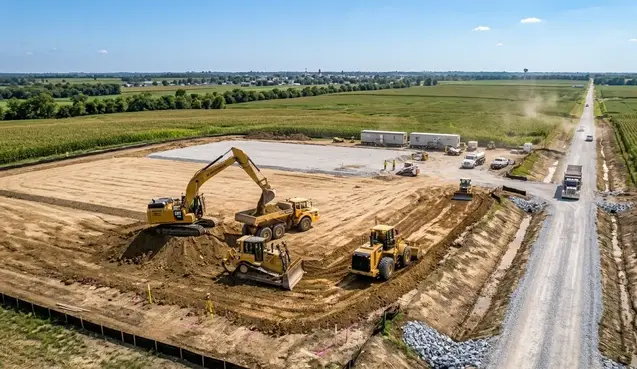
Large-scale site development requires coordinated excavation, grading, and drainage planning. These projects establish stable building platforms across wide rural properties while maintaining proper elevation and water control.
Need a Building Pad That Meets Engineer Specifications?
We work directly with builders, developers, and engineers to create stable, inspection-ready pads that meet grading, drainage, and compaction requirements before concrete crews arrive.
Why General Contractors Call Us Before They Break Ground
- We catch site problems before concrete crews ever mobilize North Missouri soils can hide moisture pockets, soft clay seams, and buried organics. We identify these issues early so builders avoid costly mid‑project surprises.
- We prevent schedule delays caused by soil failures When a pad fails inspection or won’t compact, the entire project stalls. Our prep work keeps crews moving and protects your timeline.
- We reduce change orders caused by bad site conditions Identifying unsuitable soils before construction begins prevents expensive redesigns and mid-project excavation corrections.
- We help keep concrete crews on schedule A delayed pad often delays every trade behind it. Proper site preparation keeps projects moving.
- We help projects pass inspections the first time Proper grading, drainage, and compaction reduce costly failed inspections and project downtime.
- We eliminate the rework that drains budgets later Proper compaction, drainage planning, and soil correction prevent the settling, cracking, and water issues that force builders back to a job months later.
- We know North Missouri terrain and how it behaves From Harrison County’s clay-heavy hills to Putnam County’s low‑lying flood‑prone sites, we’ve built pads across the region and understand how local soil reacts to weather, moisture, and load over time.
This is especially important for projects involving commercial construction sites and engineered pads.
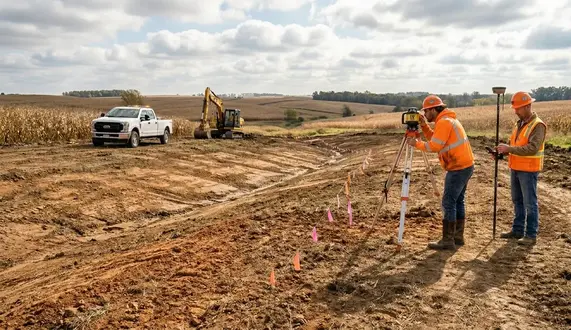
Most costly failures are prevented before excavation starts through proper site analysis, drainage evaluation, and soil assessment.
Building Pad and Foundation Services
Building Pad Excavation
Precision cut and fill work that removes unstable soils, establishes proper elevation, and creates a structurally reliable pad for homes, barns, shops, and commercial buildings.
Soil Compaction
Engineered compaction using controlled lifts and moisture conditioning to eliminate soft pockets and ensure uniform density across the entire building footprint.
Foundation Excavation
Accurate footing, slab, and perimeter trench excavation with correct depth, slope, and bearing conditions for long term structural performance.
Drainage Correction
Regrading, ditch shaping, and water redirection to prevent erosion, slab saturation, and foundation movement caused by improper runoff paths.
Site Grading
Shaping and leveling land to establish proper building elevation, driveway access, and long term water flow away from structures.
Rural Build Site Preparation
Full preparation of raw agricultural or undeveloped land, including clearing, access creation, pad layout, drainage planning, and subgrade stabilization.
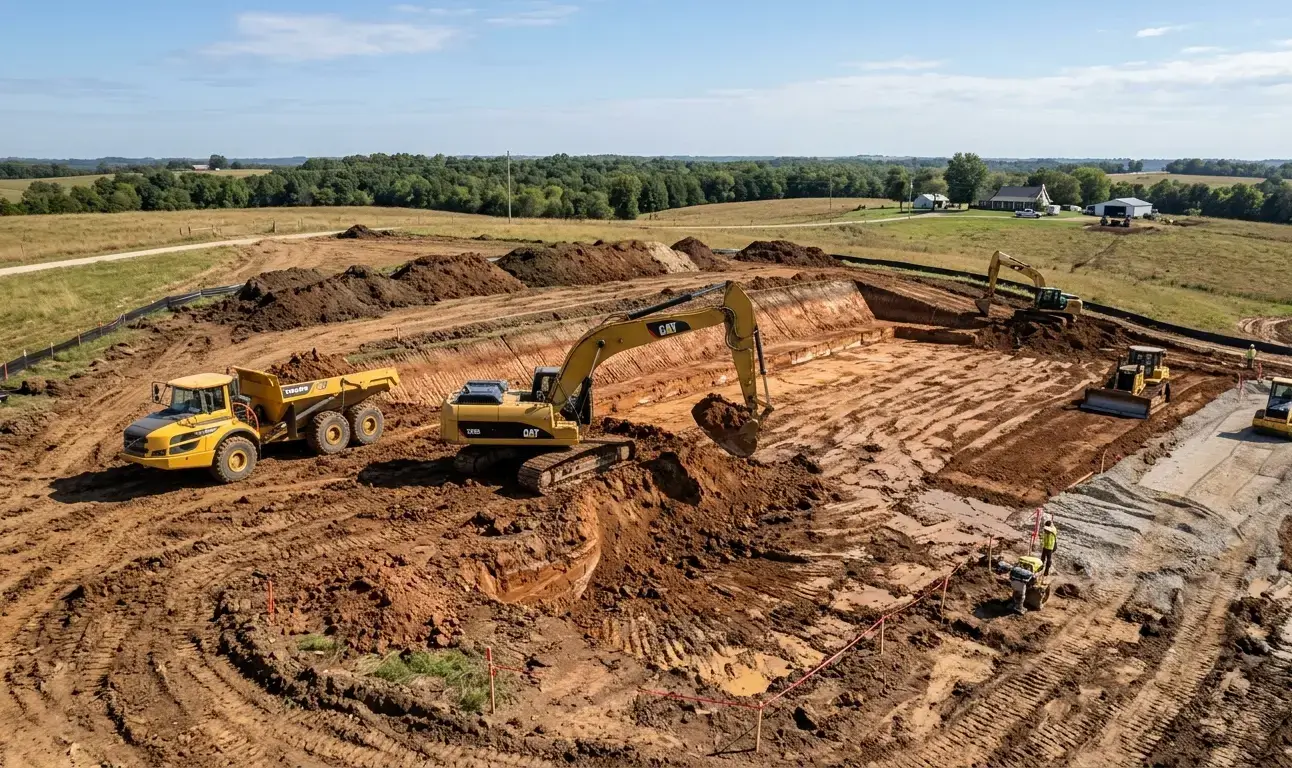
Precision building pad excavation showing cut-and-fill grading, subgrade preparation, and elevation control for residential and agricultural structures in North Missouri clay soils.
Why Proper Foundation Prep Matters
Clay-heavy soils expand and contract with moisture, and poorly compacted ground leads to long-term structural issues. Without proper preparation, even well-built structures can experience settling, cracking, and water damage.
- Prevents foundation settling and movement
- Improves long-term structural stability
- Controls water runoff around buildings
- Creates proper load-bearing support
- Reduces future repair costs
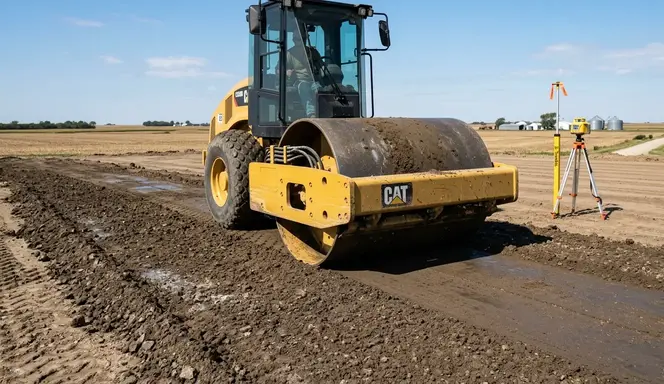
Engineered fill placed in controlled lifts and compacted to prevent settling, shifting, and foundation failure over time in clay-heavy soil conditions.
Our Foundation Preparation Process
Site Evaluation
We analyze soil behavior, slope, drainage paths, and equipment access to determine how the ground will perform under load.
We also factor in related services like excavation & site preparation and drainage correction planning to ensure long-term stability.
Topsoil Removal
We strip all organic material to refusal depth so no decomposing layers remain beneath the structure.
Excavation and Subgrade Shaping
We cut into stable material, remove weak zones, and shape the subgrade to create a uniform base for engineered fill.
Engineered Lift Placement
We place fill in controlled lifts and compact each layer to specification for consistent density across the entire pad.
Moisture Conditioning
We adjust soil moisture to the optimal range so compaction energy produces maximum stability and eliminates soft pockets.
Drainage and Final Grade
We shape the pad with intentional fall so water moves away from the structure and never collects along foundation edges.
How We Prevent the 5 Most Expensive Foundation Failures
Most structural damage is not caused by construction errors above ground. It begins below the slab long before concrete is poured, where soil behavior, moisture movement, and compaction quality determine long term stability.
These preventative methods are part of our broader grading and drainage solutions and full site preparation services.
These are the failures we actively design against on every project:
- Corner settlement: caused by uneven compaction or hidden soft zones that allow isolated sections of the slab to sink.
- Slab cracking: driven by moisture imbalance beneath concrete surfaces that creates upward or downward pressure on the slab.
- Water intrusion: the result of improper grading that directs runoff toward the structure instead of away from it.
- Frost heave movement: caused by moisture trapped in unstable soil layers that expand during freeze cycles.
- Edge separation: loss of support along perimeter footing zones where soil density is inconsistent or poorly compacted.
Each of these issues is preventable during excavation and grading, not after construction is complete. Proper soil preparation is the only reliable way to eliminate long term foundation movement.
Don't Discover Soil Problems After Concrete Is Poured
Most foundation failures start below ground. A proper site evaluation can identify drainage issues, unstable soils, and compaction concerns before they become expensive structural problems.
Building Pads For Barndominiums In North Missouri
Barndominiums place unique demands on a building pad because they often combine residential living areas with large open-span structures, workshops, garages, and equipment storage under one roof.
We specialize in full-site preparation for rural and agricultural builds, including barndominiums, shops, and outbuildings requiring engineered pads.
These buildings frequently carry concentrated loads, larger footprints, and extensive concrete slabs that require exceptional compaction and drainage control.
- Proper subgrade stabilization for large slab footprints.
- Drainage planning to keep water away from living spaces and shop areas.
- Pad elevations designed around driveways, shop access, and future outbuildings.
- Soil correction for clay-heavy North Missouri conditions.
Agricultural Building Pads Built For North Missouri Farms
Farm structures place unique demands on a building pad because they often support heavy equipment, livestock traffic, feed storage, machinery loads, and daily operational use. Agricultural foundations must withstand real-world abuse while remaining stable through seasonal moisture changes.
These projects are typically part of our farm and ranch site development services, which include full grading, access, and pad construction.
Machine Sheds
Pads designed to support tractors, combines, sprayers, and heavy farm equipment.
Livestock Facilities
Stable foundations for cattle barns, feed lots, working facilities, and agricultural operations.
Hay & Equipment Storage
Properly drained pads that prevent settlement beneath large storage structures.
Grain Operations
Site preparation for grain handling facilities, storage buildings, and agricultural infrastructure.
Riding Arenas
Level, well-drained pads that support equestrian arenas and prevent rutting or moisture buildup.
General Farm Structures
Foundations for feed storage, utility buildings, and multi-use agricultural facilities.
Commercial Building Pads & Site Preparation
Commercial construction leaves very little room for error. Pad elevations, drainage performance, compaction quality, and subgrade stability all affect inspections, schedules, and long-term structural performance.
For larger developments, we coordinate closely with commercial site preparation projects to meet engineered specifications.
We work with builders, developers, engineers, and commercial property owners to prepare sites that are ready for the next phase of construction.
- Warehouses and distribution facilities
- Retail and office developments
- Industrial and manufacturing facilities
- Commercial shops and service buildings
- Engineer-specified grading and compaction
What Impacts Building Pad Cost?
Two building pads with identical dimensions can have dramatically different costs depending on soil conditions, drainage requirements, elevation changes, and the amount of earthmoving required to create a stable foundation.
For accurate pricing based on real site conditions, visit our building pad pricing breakdown or request a full site evaluation.
- Pad Size: Larger structures require more excavation, grading, and compaction.
- Soil Conditions: Clay, organics, and unstable subgrades often require correction.
- Cut & Fill Requirements: Significant elevation changes increase earthmoving volume.
- Drainage Improvements: Swales, culverts, and runoff correction may be necessary.
- Imported Material: Some projects require engineered fill or aggregate.
- Site Accessibility: Remote locations and difficult access affect production rates.
The most accurate way to determine building pad costs is through a site evaluation where soil conditions, drainage patterns, and construction requirements can be properly assessed.
Building Pad Pricing in North Missouri: What Most Property Owners Should Expect
Building pad costs vary widely because soil behavior, drainage, elevation changes, and subgrade stability determine how much earthwork is required. Two buildings with the same dimensions can have completely different preparation needs depending on the ground beneath them.
Typical Building Pad Investment Ranges
Small Pole Barns and Outbuildings
$2,500 – $7,500+
For small storage buildings and utility structures where soil correction and grading needs are minimal.
Shop Buildings and Mid Size Barns
$5,000 – $15,000+
Typical for workshops, equipment storage, and agricultural barns requiring moderate cut, fill, and compaction work.
Barndominiums and Residential Pads
$7,500 – $25,000+
Includes structural pad preparation, engineered fill placement, moisture control, and drainage shaping for long term stability.
Large Agricultural Buildings
$10,000 – $50,000+
Machine sheds, livestock facilities, riding arenas, and large farm structures that require significant earthmoving and pad stabilization.
Pads Requiring Major Earthwork
$20,000 – $75,000+
Sites with steep elevation changes, deep cuts, heavy fill requirements, or extensive subgrade correction needs.
Pads Requiring Drainage and Soil Correction
$15,000 – $60,000+
Locations with water flow issues, clay expansion zones, soft pockets, or areas needing engineered drainage systems and moisture control.
Want an Accurate Building Pad Estimate?
Building pad costs depend on soil conditions, drainage requirements, elevation changes, and the amount of excavation required. The most accurate pricing comes from evaluating the actual site.
Building Pad & Foundation Preparation Service Area
We provide professional building pad and foundation preparation services across North Missouri, helping property owners create properly engineered ground for barns, shops, homes, and commercial structures. Every pad is cut, graded, and compacted based on real site conditions including soil type, elevation changes, drainage flow, and load-bearing requirements. The goal is simple, build a stable foundation that prevents settling, shifting, and long-term structural issues.
From rural barn pads and shop foundations to residential builds on raw acreage, we prepare land so contractors can pour concrete or begin construction on solid, properly drained ground that holds up long-term in Missouri conditions.
- Liberty, MO
- Smithville, MO
- Plattsburg, MO
- St. Joseph, MO
- Maryville, MO
- Chillicothe, MO
- Trenton, MO
- Hamilton, MO
- Gallatin, MO
- Cameron, MO
- Bethany, MO
- Princeton, MO
- Brookfield, MO
- Macon, MO
- Stanberry, MO
- King City, MO
- Albany, MO
- Jamesport, MO
- Lancaster, MO
- Unionville, MO
- Green City, MO
- Milan, MO
- Savannah, MO
- Rural North Missouri Building Sites & Acreage Properties
If you’re planning a barn, shop, home, or commercial structure anywhere in North Missouri, we can evaluate your land, assess soil and drainage conditions, and prepare a properly engineered building pad that is ready for construction.
What a Proper Building Pad Site Visit Actually Includes
A real site evaluation is not a quick walk around the property. It is a technical assessment of how your land will behave under structural load, moisture changes, and seasonal soil movement. The goal is to understand the ground before any excavation begins.
During a site visit, we evaluate the conditions that directly determine pad stability:
- Elevation changes across the build footprint: identifying high and low points that affect cut and fill requirements.
- Natural drainage flow and runoff direction: mapping how water moves across the land so the pad is never placed in a collection zone.
- Soil composition and compaction variability: locating clay seams, soft pockets, and inconsistent density that must be corrected.
- Access routes for heavy equipment and material delivery: ensuring safe, efficient movement of machinery and fill material.
- Cut and fill requirements for pad stabilization: determining how much material must be removed or added to reach stable subgrade.
The purpose of this evaluation is to eliminate unknowns before construction begins so the building pad is engineered correctly the first time and performs reliably for decades.
Not Sure If Your Property Is Ready To Build?
We evaluate soil conditions, drainage flow, elevation changes, access routes, and compaction requirements so you know exactly what your project needs before construction begins.
Recent North Missouri Building Pad Projects
Daviess County Barndominium Pad
Corrected long‑standing drainage issues, removed unstable topsoil, and built an elevated, moisture‑controlled pad designed to keep water away from the future living space.
Harrison County Equipment Shed
Installed engineered fill and stabilized clay‑heavy soils to support a large agricultural storage structure with heavy equipment load points.
Livingston County Home Site
Balanced cut‑and‑fill requirements, improved runoff control, and shaped the pad to prevent seasonal water intrusion around the future foundation.
Grundy County Livestock Barn
Removed organic material, compacted in controlled lifts, and created a high‑strength pad capable of supporting livestock traffic and equipment without settlement.
Mercer County Commercial Shop
Executed precise grading and compaction to meet engineered specifications for a commercial steel building, including drainage slopes and inspection‑ready elevations.
Putnam County Flood‑Prone Site
Raised the building footprint, installed controlled drainage paths, and rebuilt the pad to resist seasonal flooding and freeze‑thaw movement common in the area.
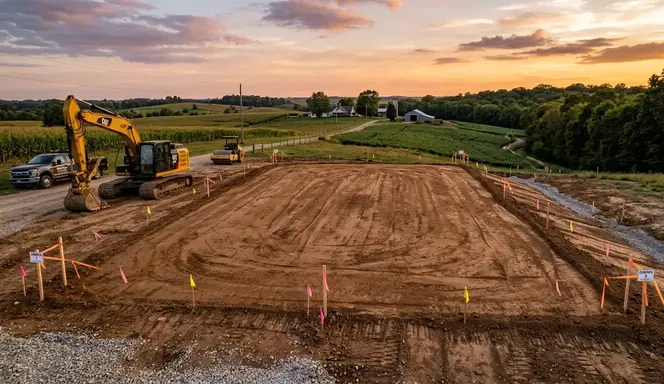
A properly engineered building pad provides a stable, compacted, and well-drained foundation ready for construction.
Why Choose Us for Building Pads in North Missouri
A building pad is the foundation of the foundation. It is where soil science, drainage strategy, and structural load planning come together to determine how your building performs for decades.
Many contractors shape dirt and call it good. We engineer the ground so it stays stable through North Missouri’s clay movement, freeze cycles, and heavy rainfall.
- We study soil behavior, not just soil appearance We test and evaluate how the soil will react to moisture, pressure, and seasonal movement so the pad is built on predictable, stable ground.
- Every pad is engineered for structural performance Each lift is placed and compacted with the goal of supporting long-term load, not simply creating a smooth grade for the moment.
- Drainage is built into the design from the start We shape the site so water moves away from the structure naturally. This prevents erosion, slab heaving, and moisture intrusion before they ever begin.
- Zero organic material in structural zones We remove roots, topsoil, and anything that can decay or settle. This eliminates future voids and prevents uneven support under the slab.
- True compaction through every lift We compact in controlled layers to create uniform density. This prevents hidden soft spots that lead to cracking and settlement.
- Built for North Missouri soil, not generic conditions Our experience across clay-heavy farmland, rolling hills, and low drainage areas means your pad is designed for the exact challenges of this region.
The goal is simple. When the concrete is poured, the ground beneath it should already be performing like a finished foundation.
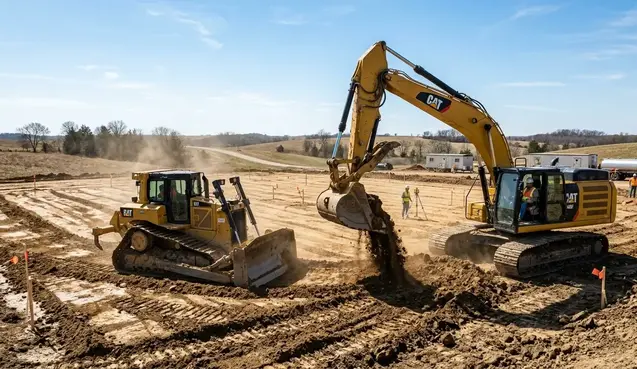
Heavy equipment precision grading ensures proper compaction, drainage, and long-term structural stability for every building pad.
Get Your Building Pad Done Right the First Time
Call today for professional foundation preparation and site grading across North Missouri.
Call for Free EstimateIs This Type of Site Prep Right for Your Project?
Ideal For
- Barndominium builds needing long-term stability
- Farm and equipment barns with heavy load points
- Commercial structures requiring engineered support
- Rural home construction on clay-heavy soils
- Contractors needing reliable subgrade preparation
Not a Fit For
- “Cheapest dirt work possible” expectations
- Projects ignoring drainage planning
- Builds skipping compaction or engineering steps
- Short-term or cosmetic grading only
Perfect for Challenging Terrain
Sloped, uneven, or rolling ground where proper shaping, compaction, and drainage design prevent long-term movement and erosion.
Ideal for High-Moisture or Poor-Drainage Areas
North Missouri’s clay soils hold water. Engineered pads prevent heaving, swelling, and seasonal movement that destroy foundations over time.
Best for Heavy-Use or High-Load Structures
Shops, barns, and commercial buildings with equipment, vehicles, or livestock benefit from pads designed to carry real-world weight without settling.
For Owners Who Want Long-Term Protection
If you want a structure that stays level, drains correctly, and avoids costly repairs, engineered site prep is the smartest investment you can make.
Frequently Asked Questions About Building Pad & Foundation Preparation in North Missouri
A building pad is the most important part of any structure, barn, shop, home, or commercial building. If the pad is not properly cut, compacted, and drained, everything built on top of it is at risk. These are the most common questions we get from property owners preparing for construction across North Missouri.
You can also review related services like drainage solutions or pond construction if your project involves water management concerns.
- What is a building pad and why is it important?
- A building pad is a prepared and engineered section of ground that supports a structure. It involves cutting, filling, grading, and compacting soil so the surface is stable, level, and properly drained. Without a properly built pad, structures can settle, shift, crack, or experience long-term foundation issues.
- What does building pad preparation include?
- It includes clearing vegetation, stripping topsoil, cutting or filling grade, compacting subsoil, shaping drainage flow, and preparing the surface for concrete or foundation work. In many cases, we also install access routes and correct surrounding drainage so water does not compromise the pad.
- Why is proper compaction so critical for a building pad?
- Compaction removes air pockets and stabilizes the soil so it can properly support structural loads. In North Missouri’s clay-heavy ground, improper compaction leads to settling, shifting, and cracking over time — especially during freeze-thaw cycles and heavy rain seasons.
- How do you decide where to place a building pad on my property?
- We evaluate elevation, drainage flow, soil stability, access routes, and long-term water movement. Pads are placed on higher, stable ground whenever possible, away from low spots, runoff paths, and saturated clay areas that could weaken the foundation over time.
- What soil conditions can affect a building pad in North Missouri?
- Clay soil expansion, soft agricultural ground, buried organic material, and seasonal moisture changes all impact stability. If these conditions are not corrected before construction, they can cause uneven settling and structural movement after the build is complete.
- Can you build pads on raw or undeveloped land?
- Yes. Most building pad projects start on raw acreage or pasture land. We clear, strip, grade, and stabilize the site before building a compacted pad that is ready for concrete, pole barns, shops, or residential foundations.
- How do you handle drainage around a building pad?
- We design slope and runoff direction so water moves away from the structure, not toward it. This may include grading swales, installing culverts, reshaping surrounding terrain, and controlling surface runoff to prevent water intrusion or erosion.
- What causes building pad failure or foundation issues?
- The most common causes are poor compaction, improper drainage, building on organic or unstable soil, and ignoring seasonal ground movement. These issues often show up later as cracking slabs, sinking corners, or shifting structures.
- How long does it take to build a proper pad?
- Timeline depends on size, soil conditions, access, and weather. Small residential or shop pads may take a day or two, while larger barn or commercial pads can take longer if significant grading or soil correction is required.
- Do building pads need to be inspected or engineered?
- Some projects, especially commercial or larger structural builds, may require engineered specifications or inspections. We can work from engineered plans or help prepare the site to meet those requirements.
- How do I get an accurate estimate for my building pad?
- The most accurate pricing comes from an on-site evaluation. We assess soil type, elevation, drainage patterns, access for equipment, and the size of the structure before giving a clear, realistic estimate.
Start Your Project With Proper Site Preparation
Building pads, foundation preparation, grading, compaction, and drainage solutions designed to create stable construction sites that perform for decades in North Missouri soil conditions.
Call (660) 371-5901