Utility Trenching Services in North Missouri
Professional utility trenching for water lines, electrical conduit, gas lines, fiber optic installation, and drainage utilities across North Missouri. Many utility installations are performed alongside site preparation projects and building pad construction for new homes, shops, barns, and commercial developments. We excavate precise, code-ready trenches for residential, commercial, and rural properties, ensuring underground utilities are installed safely and built to last. Every trench is carefully planned for depth, slope, soil conditions, and long-term ground movement to prevent future line failures, freezing, or damage.
Serving Chillicothe, Kirksville, Cameron, Trenton, Bethany, Moberly, St. Joseph, Maryville, Brookfield, Macon, and surrounding North Missouri farms, acreage, residential, and commercial properties.
What Most Utility Failures Actually Start With (And Why It’s Almost Never the Utility Itself)
When a water line freezes, a fiber line quits, or an electrical conduit gets crushed, most people assume the utility was defective. In reality, the failure usually began long before anything was ever installed during the trenching phase.
After years of repairing failed utilities across North Missouri, we see the same preventable mistakes over and over:
-
Trenches Dug Too Shallow
If a water line sits above frost depth, it’s not a matter of if it will freeze, it’s when. Homeowners often ask, “Why did my line freeze when it’s brand new?” The answer is simple: the trench wasn’t deep enough to protect it from Missouri winters. -
No Bedding Material Under Water or Gas Lines
A pipe laid directly on rock or hard clay will eventually crack from pressure points. Proper bedding acts like a shock absorber, but many DIY trenches skip this step entirely, leading to leaks months later. -
Rock or Clay Left in the Trench
We routinely find jagged rock sitting directly against plastic pipe. Over time, vibration, soil movement, and frost cycles grind the pipe until it fails, usually right when you need it most. -
Sharp Elevation Changes That Trap Water
A trench that dips and rises creates low spots where water collects. When temperatures drop, those pockets freeze solid and block the line. Most homeowners never realize the trench shape, not the pipe, caused the issue. -
Utilities Installed Too Close Together
Water, electric, fiber, and gas all require separation for safety and serviceability. When they’re stacked or touching, repairs become dangerous, expensive, and sometimes impossible without digging everything back up.
These aren’t “utility problems.” They’re excavation problems that don’t show up until months or years later, long after the trench is covered and forgotten. Proper trenching eliminates these risks before the first pipe or conduit ever goes in the ground, saving property owners thousands in future repairs.
Underground Utility Installation Starts With Proper Trenching
Utility trenching is the foundation of every underground system, and water, electric, gas, fiber, and drainage all depend on precise excavation. If the trench is wrong, everything installed in it becomes vulnerable to failure.
Many trenching projects occur after land clearing and before foundation and building pad preparation , making utility placement an important part of overall site development.
In North Missouri, soil conditions vary from hard clay to soft agricultural ground, which makes depth control, slope, and compaction critical.
We don’t just dig trenches, we engineer safe underground pathways that protect your utilities for decades.
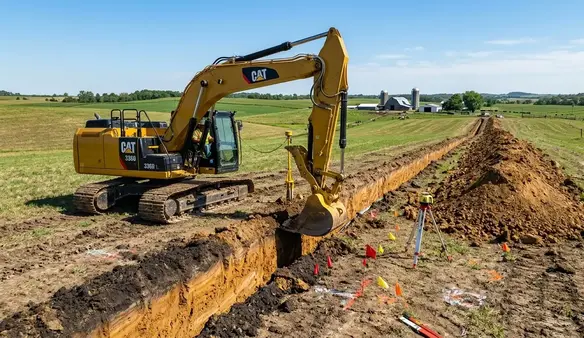
Proper utility planning helps avoid future conflicts with buildings, driveways, drainage systems, and property expansion projects.
Planning a New Utility Installation?
Whether you're running water to a new home, power to a shop, fiber to a rural property, or utilities for a commercial project, trench design directly impacts long-term reliability.
We provide precise utility trenching across North Missouri with careful depth control, utility separation, and site-specific planning.
Get a Utility Trenching QuoteWhy Utility Locates Matter Before Any Trenching Project
Every trenching project begins with one critical step: identifying what is already underground. Many utilities sit only a few inches below the surface, and most of them cannot be seen, heard, or guessed at. A proper locate protects people, equipment, and the services your property depends on.
North Missouri properties often contain a mix of old service lines, abandoned utilities, private water systems, and undocumented repairs. Without accurate locating, a simple trench can turn into a dangerous and expensive problem.
Locates are especially important before land clearing , demolition work , or large-scale commercial site preparation projects begin.
-
Electric Line Identification
Striking a buried electric line can damage equipment and create serious safety hazards. Locating ensures trench routes avoid energized service paths. -
Gas Line Locating
Gas lines are often shallow and difficult to detect. Proper marking prevents leaks, service interruptions, and emergency repairs. -
Communication and Fiber Line Marking
Fiber lines are thin, fragile, and expensive to repair. A single cut can disrupt service for multiple properties. -
Water Service Location Verification
Older water lines may not follow straight paths. Locating helps prevent breaks that can flood trenches or shut down service. -
Reduced Excavation Risk and Service Outages
Accurate locates protect both the property owner and the surrounding infrastructure. Safe digging keeps the project on schedule and avoids costly downtime.
Utility locating is not a formality. It is the foundation of a safe, predictable trenching project and the best way to protect what is already in the ground.
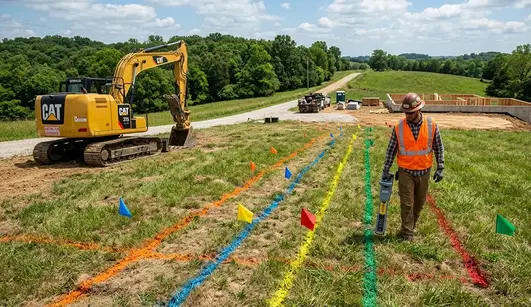
Utility locates identify existing underground infrastructure before excavation begins, helping prevent costly damage to buried electric, gas, water, sewer, and communication lines.
Need Utilities Located Before Digging Begins?
Unknown utility locations are one of the biggest causes of project delays, damaged infrastructure, and costly repairs.
Before trenching starts, we can help evaluate the site, identify potential utility conflicts, and develop a safe excavation plan.
Schedule a Site Review (660) 371-5901Utility Trenching Services We Provide
Water Line Trenching
Residential, farm, and rural water system trenching with proper depth and frost protection planning.
Electrical Conduit Trenching
Safe underground electrical conduit installation paths for homes, barns, shops, and commercial sites.
Gas Line Excavation
Precise trenching for gas line installation with strict safety spacing and code compliance.
Fiber Optic Trenching
High-precision shallow trenching for rural broadband and fiber internet installation.
Drainage Utility Lines
French drains, culvert tie-ins, and subsurface water control systems that often support larger grading and drainage improvement projects.
Rural Utility Runs
Long-distance trenching across farms, acreage, and uneven terrain for utility extension projects.
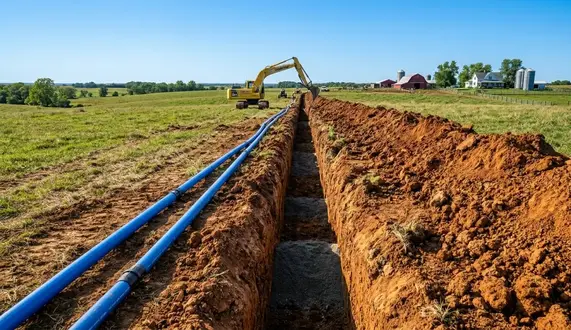
Utility trenching projects often include long-distance water service installations for homes, farms, livestock facilities, shops, and rural development properties throughout North Missouri.
Water Line Installation and Replacement Across North Missouri
Water line trenching in rural North Missouri demands more than simply digging to a target depth. Our region’s freeze cycles, clay soils, and long service runs mean every line must be installed with careful attention to grade, bedding, and long‑term pressure behavior. A water line that performs well in summer can fail in winter if the trench was not prepared correctly.
We install and replace water lines for homes, farms, livestock systems, and new construction projects. Each site requires a different approach based on soil conditions, frost depth, and the distance from the supply source.
-
Rural Water Service Installation
Many rural connections involve long runs from the meter to the home or barn. We maintain consistent depth and protect the line from pressure changes caused by clay movement and seasonal frost. -
Farm and Livestock Water Systems
Hydrants, tanks, and watering systems need reliable flow even in the coldest months. We route lines where livestock and equipment cannot damage them and use bedding that prevents freeze‑related stress. -
New Construction Water Lines
New homes require careful coordination with foundation preparation , driveway construction , and site drainage systems . We plan routes that stay clear of future landscaping and allow easy access for repairs or upgrades. -
Frost‑Depth Protection Planning
Missouri frost depth varies by county and soil type. We evaluate local conditions and install lines deep enough to prevent freezing and long‑term pressure issues.
Proper trench depth, bedding, and backfill are essential in Missouri’s freeze‑thaw climate. When installed correctly, a water line should last for decades without freezing, leaking, or losing pressure.
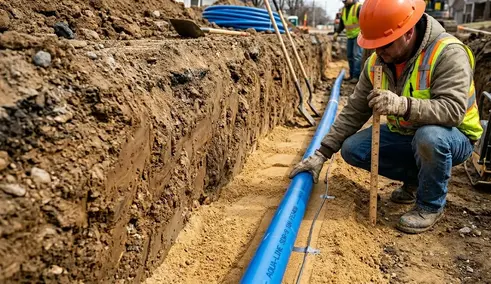
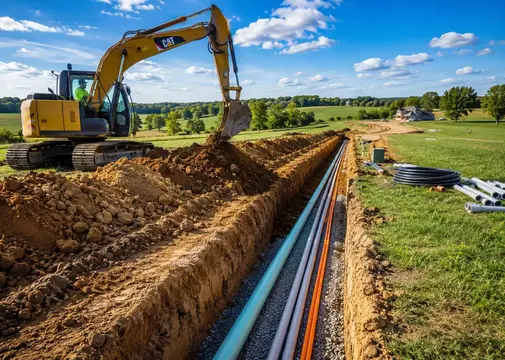
Proper bedding installation ensures water lines remain stable, protected from shifting soils, frost movement, and long-term ground settlement across rural North Missouri properties.
Electrical Service Conduit Trenching
Underground electrical service requires more than digging a straight line from the meter to the building. Conduit depth, spacing, soil conditions, and route planning all determine how reliable and safe the system will be once it is energized. A well‑built trench protects the electrical system from moisture, soil movement, and heavy equipment traffic for decades.
We prepare precise conduit trenches that meet spacing, depth, and safety requirements for licensed electrical installation. Every route is planned to avoid future driveways, building pads, and areas where heavy equipment will operate. This planning becomes especially important during commercial site development and farm and ranch expansion projects .
-
Meter to Building Power Runs
These are the backbone of most rural electrical systems. We maintain consistent depth and proper conduit bedding so the line stays protected from frost movement and soil pressure. -
Barn and Shop Electrical Service
Agricultural buildings often require higher amperage and future expansion. We size and route conduit so upgrades can be added without re‑trenching the entire run. -
Underground Residential Power
Homes need clean, direct routes that avoid future landscaping, patios, and driveways. Proper conduit installation prevents moisture intrusion and keeps the line accessible for future service. -
Agricultural Electrical Systems
Grain sites, machine sheds, and livestock facilities place heavy demands on electrical infrastructure. We design trenches that support higher loads and protect conduit from equipment traffic and soil compaction.
Electrical conduit trenching is long‑term infrastructure work. When installed correctly, it keeps your power system safe, accessible, and ready for future expansion without unnecessary excavation.
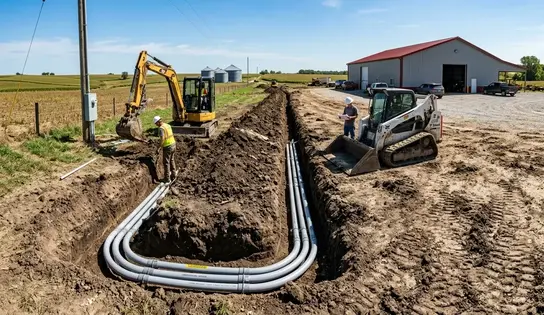
Electrical conduit trenching requires precise depth, separation from other utilities, and careful routing to ensure safe, code-compliant underground power service installation.
Fiber Optic and Rural Broadband Trenching
Fiber trenching plays a major role in bringing reliable internet to rural North Missouri. These installations require clean, predictable conduit paths that protect delicate fiber strands from soil movement, moisture, and equipment traffic. A well‑built trench ensures the signal stays strong and the line stays serviceable for future upgrades.
Fiber trenches are usually shallower than water or gas lines, but they demand higher precision. A small kink, sharp bend, or poorly compacted trench can weaken the signal or shorten the lifespan of the cable.
-
Rural Broadband Installation
We create stable conduit routes that support long-distance fiber runs across farms, acreages, and rural subdivisions. Proper routing prevents future conflicts with driveways , drainage improvements , and new construction projects. -
Fiber Conduit Trenching
Fiber requires smooth, consistent trench bottoms and controlled bends. We install conduit that protects the cable from pressure points and allows easy replacement if needed. -
Future‑Ready Communication Lines
Many rural properties eventually add shops, cabins, or home offices that need high‑speed service. We size and place conduit so additional fiber can be pulled later without re‑trenching. -
Utility Corridor Integration
Fiber often shares a corridor with water, power, or irrigation lines. We plan spacing and depth so each utility stays accessible and safe from interference.
A properly installed fiber trench protects your connection, reduces service interruptions, and keeps your property ready for future broadband improvements. Precision during installation is the key to long‑term performance.
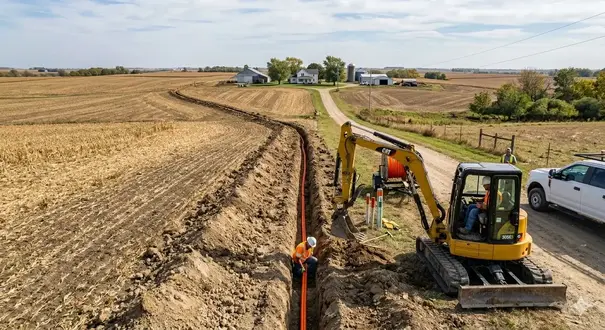
Fiber optic trenching creates protected underground pathways for rural broadband expansion, helping homes, farms, and businesses gain reliable high-speed internet access.
Why Proper Utility Trenching Matters
Poor trenching leads to crushed lines, water leaks, electrical failures, and expensive repairs underground. Most utility failures start with incorrect depth, poor bedding, or improper backfill.
- Prevents future utility line collapse or shifting
- Protects against frost heave in Missouri winters
- Ensures proper separation between utilities
- Reduces long-term repair costs
- Keeps systems code compliant and safe
Not Sure If Your Utility Layout Is Planned Correctly?
Utility mistakes are expensive because they're buried underground. Incorrect depth, poor routing, and future building conflicts often aren't discovered until years later.
We can evaluate your property and help determine the best route for water, electric, gas, fiber, and drainage utilities before excavation begins.
Schedule a Utility Layout ReviewCommon Signs You May Need Utility Repair or Re-Trenching
Most underground utility problems do not fail all at once. They usually start with small symptoms on the surface that point to deeper issues below. Recognizing these early signs can prevent major repairs and protect the rest of your system.
-
Sudden Water Pressure Loss
A drop in pressure often means a leak, crushed pipe, or shifting soil that has stressed the line. Clay soils in North Missouri can move enough to pinch or pull fittings apart. -
Intermittent Electrical Issues
Flickering lights or unexplained outages can indicate conduit damage, moisture intrusion, or a failing underground splice. These problems tend to worsen as soil movement increases through the seasons. -
Unstable Internet or Fiber Connection
Fiber is sensitive to bending, pressure, and trench settlement. Signal drops often point to a stressed conduit, a crushed section, or soil shifting around the line. -
Wet Ground or Unexplained Saturation
Underground leaks can saturate soil long before water reaches the surface. Persistent wet spots, even in dry weather, are a strong indicator of a failing water line. -
Driveway or Yard Settling
A sinking area above a utility route often means the trench was not compacted correctly or a line has failed and washed out the soil. -
Frequent Repairs in the Same Area
Repeated issues usually mean the original trenching was too shallow, poorly bedded, or routed through unstable ground. Re‑trenching is often the long‑term fix.
Early detection is the key to preventing major failures. When these signs appear, it usually means the utility is under stress and the trench may need evaluation or corrective work.
How Trench Depth Requirements Vary by Utility Type
Every utility has its own depth requirements because each one reacts differently to frost, soil movement, equipment traffic, and long‑term pressure changes. Depth is not just a code requirement. It is a performance decision that determines how well the utility will hold up over time.
-
Water Lines
Water lines are typically installed deeper to protect against freezing and seasonal ground movement. Proper depth keeps pressure stable and prevents fittings from being stressed by expanding clay soils. -
Electrical Conduit
Electrical conduit usually sits at a moderate depth with required spacing from other utilities. The goal is to protect the line from equipment traffic while keeping it accessible for future service. -
Gas Lines
Gas lines follow regulated depth and strict separation rules for safety. Proper spacing prevents interference with electrical and water systems and reduces risk during future excavation. -
Fiber Optic Lines
Fiber is often installed at shallower depths, but it still needs protection from surface disturbance and soil compaction. Smooth trench bottoms and controlled bends are critical for signal reliability.
Proper depth planning ensures each utility performs safely and reliably while reducing the chance of damage during future excavation or property improvements. When depth is chosen with soil conditions and long‑term use in mind, utilities last longer and require far fewer repairs.
How North Missouri Soil Conditions Affect Underground Utilities
Two properties can sit a mile apart and behave completely differently underground. North Missouri’s mix of clay, rock, silt, and old farm fill means utilities must be installed with the soil, not against it.
Here are the six soil conditions we encounter most often and how each one affects trenching and long‑term utility performance:
Heavy Clay Soils
Clay swells when wet and shrinks when dry, creating constant pressure changes around buried utilities. Without proper bedding, clay movement can pinch water lines, crack conduit, or shift fittings out of alignment.
Limestone & Rock Layers
Shallow rock shelves and fractured limestone create uneven trench bottoms and sharp contact points. Utilities laid directly on rock eventually wear through, so depth control and protective bedding are essential.
Creek Bottom Silt
Soft, moisture‑rich soils shift easily and rarely compact well. Lines installed here without stabilization can float, settle, or lose grade as seasonal water levels rise and fall.
Farm Ground & Old Fill
Decades of buried debris, fence wire, and inconsistent soil density make these areas unpredictable. Utilities require careful excavation and controlled backfill to avoid future settling or damage.
Glacial Till & Mixed Soils
North Missouri’s glacial deposits often mix clay, gravel, sand, and rock in the same trench run. Each layer behaves differently, so bedding and compaction must be adjusted as conditions change.
Root‑Heavy Woodland Soil
Tree roots chase moisture and can wrap around or displace water lines over time. Routing utilities through wooded areas requires strategic placement to avoid long‑term root intrusion.
Soil behavior is one of the biggest factors determining whether a utility lasts decades or becomes a recurring repair. In North Missouri, the ground changes fast, and your trenching plan has to change with it.
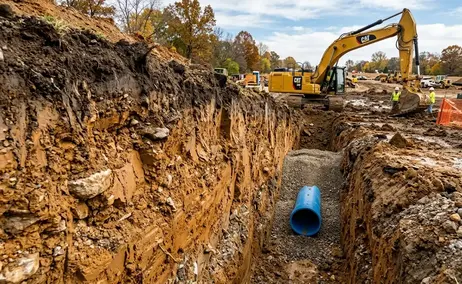
Clay-rich soils common throughout North Missouri can expand, contract, and retain moisture, making proper trench depth, bedding, drainage, and compaction critical for long-term utility performance.
Professional Trenching Equipment
- Excavators for deep utility trenches
- Trenchers for long linear utility runs
- Skid steers for grading and cleanup
- Laser grading systems for depth accuracy
- Compaction equipment for safe backfill
When You Should NOT Install Utilities Yet
Installing utilities too early is one of the most expensive mistakes rural property owners make. A trench dug at the wrong time doesn’t just waste money, it can block future buildings, disrupt drainage, or force you to dig everything back up later.
Here are the situations where we strongly recommend waiting:
-
The Building Pad Location Isn’t Finalized
If the house, shop, or barn shifts even a few feet, the utility route must shift with it. We see this constantly: a pad gets moved uphill for drainage, and suddenly the water line is in the wrong place — or worse, directly under the new foundation. -
Drainage Problems Haven’t Been Corrected Yet
Utilities installed before drainage is fixed often end up sitting in water, washing out, or freezing. A trench should never become a drainage ditch, but that’s exactly what happens when utilities go in too early. -
Heavy Equipment Access Isn’t Established
If concrete trucks, dozers, or semis still need to cross the property, utilities must wait. Heavy equipment can crush shallow lines, collapse trenches, or compact soil so tightly that future repairs become a nightmare. -
Future Structures May Cross the Utility Path
Shops, lean‑tos, driveways, livestock facilities, and grain bins often get added later. A poorly timed utility installation can block future expansion and force expensive relocations. We plan routes so you never have to dig up a line just to build something new.
Utilities should always follow the site plan, never precede it. When they go in too early, you’re not “getting ahead.” You’re setting yourself up to pay twice for the same trench.
Not Sure If Your Property Is Ready For Utility Installation?
Utility trenching should support the overall site plan, not work against it. Installing utilities too early often leads to expensive relocations and duplicate excavation costs.
We can evaluate your building locations, drainage plans, driveway layout, and future expansion goals before trenching begins.
Talk With an Expert (660) 371-5901Before You Dig Checklist for Property Owners
Good trenching starts long before the equipment arrives. A few minutes of planning can prevent utility conflicts, unnecessary re‑trenching, and thousands of dollars in avoidable changes later. These are the items every property owner should confirm before excavation begins.
-
Confirm final building locations
Utility routes should never run under future slabs, porches, or additions. Lock in building footprints so trenching supports the long‑term layout of the property. -
Mark driveway and access routes
Driveways and equipment paths influence trench depth and conduit protection. Knowing these locations early prevents utilities from being crushed or exposed later. -
Identify drainage flow paths
Utilities should never sit in natural water channels or low spots. Mapping drainage helps avoid washouts, frost issues, and long‑term settling. -
Plan for future expansion
Shops, cabins, RV hookups, and fiber upgrades often get added later. Planning ahead keeps utility corridors organized and prevents re‑digging the same ground twice. -
Verify all utility locates
Public and private locates must be completed before digging. This protects existing lines and ensures the new route avoids buried hazards. -
Review the full route with your installer
Walking the route together helps catch obstacles like tree roots, rock shelves, or grade changes that affect trench depth and performance.
A well‑prepared site leads to a clean, efficient trenching project and utilities that perform reliably for decades. The more planning done upfront, the fewer surprises you face once digging begins.
Most Expensive Utility Mistakes We See On North Missouri Properties
One of the biggest advantages of hiring an experienced excavation contractor is avoiding mistakes that don't show up until years later. We regularly visit properties where utilities technically work—but were installed in locations that create expensive problems when the owner builds, expands, or develops the property later.
Most of these issues are completely avoidable with proper site planning before the first trench is ever excavated.
Building The Driveway Before Installing Utilities
This is one of the most common mistakes we see. The driveway gets completed first, then the owner realizes they still need water, electric, fiber, or gas installed.
The result is cutting through a brand-new driveway, repairing gravel or pavement, and paying for excavation twice.
Running Utilities Through Future Pond Locations
Many acreage owners eventually add ponds for livestock, recreation, fishing, or water management.
We've seen utility corridors installed directly through future pond sites, forcing expensive relocation work before excavation can begin.
Installing Electric Without Spare Conduit
Property owners often install exactly what they need today and nothing more.
Five years later they want a shop, security gate, internet upgrade, RV hookup, or livestock facility and must trench the entire route again.
Spare conduit is often inexpensive compared to future excavation costs.
Crossing Septic Reserve Areas
Utilities routed through septic reserve fields can create future permitting and construction headaches.
A utility route should support future septic flexibility rather than limiting it.
Running Utilities Through Future Expansion Zones
We frequently see water and electrical lines installed exactly where future shops, barns, garages, machine sheds, and additions eventually need to be built.
Years later the owner is forced to relocate utilities before construction can begin.
Ignoring Livestock Traffic Patterns
Farm properties operate differently than suburban lots.
Water lines installed through heavy cattle traffic, feeding areas, gates, and equipment crossings often experience more wear, maintenance challenges, and future access problems.
Utility routes should account for how the property actually functions day-to-day.
The best utility route isn't always the shortest route. It's the route that protects future property development, minimizes future excavation, avoids conflicts with drainage and structures, and keeps maintenance simple for decades.
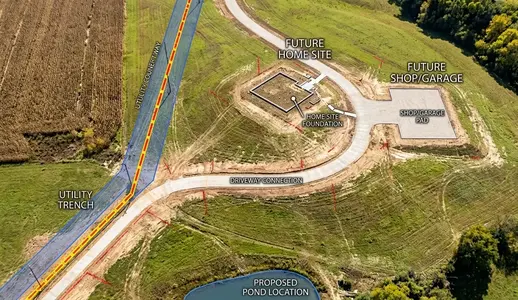
Careful utility corridor planning helps property owners avoid future conflicts with homes, shops, barns, ponds, driveways, septic systems, and long-term property development projects.
Avoid Expensive Utility Relocation Mistakes
Get experienced trench routing and site planning before you install water, electric, gas, or fiber across your property.
Call Now (660) 371-5901Utility Trenching Designed for Future Property Development
Many property owners call us for a single water line, power run, or fiber conduit. What they’re really doing is laying the groundwork for every improvement that comes later, and the route chosen today determines how easy (or expensive) those future upgrades will be.
We regularly trench properties that eventually add:
-
Additional Homes
Family expansions, rental units, or multi‑generation living often require new service lines. Planning corridors early prevents utilities from blocking future building pads. -
Machine Sheds & Equipment Buildings
These structures need power, lighting, and sometimes water. A well‑planned trench route keeps these upgrades simple instead of forcing a full re‑dig. -
Livestock Facilities
Hydrants, electric fencing, and waterers all depend on smart utility placement. We route lines where they won’t interfere with corrals, alleys, or future expansions. -
RV Hookups & Outdoor Power
RV pads, campsites, and outdoor work areas often get added later. A dedicated corridor makes adding power or water straightforward. -
Guest Cabins & Small Rentals
Rural properties frequently add short‑term rentals or guest spaces. Proper trench planning ensures utilities can be extended without crossing driveways or tearing up finished yards. -
Workshops & Hobby Buildings
These often require heavier electrical service or multiple utilities. A planned route avoids bottlenecks and keeps upgrade options open. -
Fiber Internet Upgrades
Many rural areas are transitioning to fiber. Leaving space for future conduit prevents the need to trench across the entire property again. -
Commercial or Ag‑Business Buildings
When a property grows into a business, utility demands grow with it. A well‑designed corridor supports higher loads and additional service lines.
Because of this, we design utility corridors with long‑term expansion in mind whenever possible. A few minutes of planning today can prevent thousands of dollars in re‑excavation later — and keep your property ready for whatever you build next.
Planning Future Buildings, Shops, or Expansion?
We design utility corridors that support future homes, barns, machine sheds, livestock facilities, and property upgrades without costly re-trenching later.
Schedule a Site EvaluationUtility Trenching for New Home Construction
Building a home means dozens of trades will eventually work in the same space. Utility trenching has to be timed and routed with precision so nothing conflicts with foundations, septic placement, driveway layout, or final grading. When utilities go in at the right stage, the entire build moves smoother and avoids costly rework.
We coordinate trenching for all essential home‑build utilities, including:
-
Water Service Lines
Proper depth and bedding protect against freeze issues and pressure changes. We route lines so they stay clear of future porches, patios, and retaining walls. -
Electrical Service Conduit
Power routes must meet utility‑company requirements and avoid future driveway crossings. A well‑planned conduit path prevents expensive relocations when the home layout shifts. -
Gas Service Installation
Gas lines require specific spacing from electrical and water. We plan routes that maintain safety clearances and keep future service access simple. -
Fiber Internet Conduit
Running fiber conduit during construction prevents the need to trench through finished yards or new landscaping later. We size conduit so future upgrades can be pulled without re‑digging. -
Drainage Infrastructure
Sump discharge, downspout drains, and yard drainage must be coordinated so they never cross or undermine utility lines. Good drainage planning protects both the home and the utilities serving it.
Proper sequencing keeps utilities accessible, protected, and out of the way of future improvements. When trenching is planned with the entire build in mind, you avoid conflicts, delays, and the frustration of paying to dig the same ground twice.
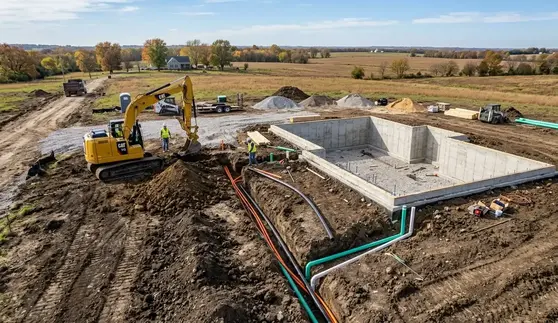
Coordinating utility installation during new home construction helps prevent conflicts with foundations, driveways, drainage systems, septic components, and future landscaping improvements.
What We Look At During a Utility Route Consultation
Digging the trench is rarely the hard part. The real value comes from choosing a route that won’t interfere with future buildings, drainage, or access as your property develops.
-
Future Home Locations
We make sure utilities won’t end up under a slab, porch, or future addition. A small layout change later can become a major relocation cost if the route isn’t planned correctly. -
Shops, Barns, Garages & Additions
Outbuildings often get added over time. We route utilities so you can expand without digging up what you already paid to install. -
Driveway & Access Road Expansion
Utilities under driveways need deeper burial and protection. We plan crossings so heavy equipment and future traffic won’t crush or expose your lines. -
Pond, Drainage & Water Flow Plans
Water always wins. We avoid low spots, washout paths, and future pond construction areas so utilities stay stable through every season. -
Livestock & Agricultural Operations
Corrals, hydrants, feed lines, and equipment routes all influence where utilities should (and shouldn’t) go. We design routes that work with your operation, not against it. -
Future Utility Capacity Needs
Many properties eventually need more power, more water, or additional service lines. We plan routes with room for upgrades so you don’t have to start over later.
Our goal is simple: install utilities once, install them right, and make sure they never limit what you want to build in the future.
Need Help Planning Utility Routes Across Your Property?
We evaluate drainage, future buildings, driveway locations, livestock operations, utility access, and long-term expansion before the first trench is ever excavated.
Request a Utility ConsultationUtility Trenching Beneath Existing Driveways and Access Roads
Many utility projects require crossing existing gravel driveways, private roads, farm lanes, and access routes. These crossings demand more planning than open‑ground trenching because the soil is compacted, the traffic loads are heavier, and the consequences of failure are far more expensive.
Before we cross any roadway, we evaluate several critical factors to ensure long‑term performance:
-
Correct Burial Depth
Driveway crossings require deeper installation to protect utilities from vehicle weight, frost movement, and long‑term compaction. -
Protective Conduit & Sleeving
We often install heavy‑duty conduit or casing pipe so the utility can be serviced or replaced later without tearing up the entire driveway. -
Traffic Load Considerations
Pickups, tractors, semis, and livestock trailers all create different stress levels. We design crossings to handle the heaviest equipment expected on the property. -
Drainage & Water Flow
Roadways often channel water. If a trench isn’t shaped and compacted correctly, water can wash out the crossing or expose the utility over time. -
Future Service Access
A properly installed crossing allows repairs or upgrades without destroying the road surface, saving thousands in future excavation costs.
Roadway crossings are one of the most critical parts of any trenching project and are frequently coordinated with driveway and private road construction projects. When installed correctly, they protect your utilities, preserve your driveway, and eliminate costly rework down the road.
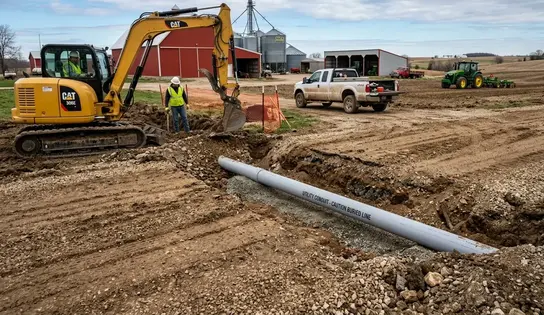
Utility crossings beneath driveways and access roads require proper depth, conduit protection, compaction, and drainage control to withstand daily traffic and heavy equipment use.
North Missouri Soil Conditions That Affect Utility Trenching
Soil conditions determine how a trench behaves during excavation and how well a utility performs over time. Across North Missouri we encounter a wide range of ground types, each with its own challenges for depth, stability, drainage, and long‑term reliability. Understanding these conditions helps us choose the right excavation method and protect your utilities from future problems.
-
Heavy Clay Soils
Clay expands when wet and contracts when dry. This movement can stress water lines, shift conduit, and cause trenches to settle if not bedded correctly. Clay also drains slowly, which increases freeze risk in winter. -
Rock Shelves and Limestone
Shallow rock layers are common in certain counties. These areas require specialized excavation tools and careful depth planning to avoid damaging utilities or creating uneven trench bottoms. -
Agricultural Topsoil
Productive farm ground is deep, soft, and valuable. After trenching, it must be restored properly so fields remain smooth for planting and equipment use. Poor restoration can create long‑term ruts and drainage issues. -
Soft Drainage Areas
Low spots, swales, and natural water paths often require stabilization. Utilities placed in these areas need additional depth, bedding, or rerouting to prevent washouts and frost problems. -
Mixed Soil Profiles
Many properties transition from clay to rock to topsoil within a short distance. These changes affect trench stability and require adjustments in bedding and compaction to keep utilities protected. -
Freeze‑Prone Ground
Areas with shallow frost pockets or poor drainage can push utilities upward or cause winter failures. We identify these zones and adjust depth and bedding to maintain long‑term reliability.
Knowing how each soil type behaves allows us to build trenches that stay stable, protect utilities, and reduce long‑term maintenance. Soil conditions are one of the most important factors in a successful installation.
How North Missouri Weather Impacts Underground Utilities
North Missouri experiences some of the most utility‑challenging weather patterns in the Midwest. Long dry spells, sudden heavy rainfall, deep winter freezes, and highly expansive clay soils all influence how trenches behave and how well utilities perform over time. A trench that works in July may fail in January if it was not planned with these conditions in mind.
Seasonal extremes cause the ground to shift, swell, contract, and hold water. Poorly located trenches can collect runoff, trap moisture around conduit, or experience frost movement that stresses pipes and fittings. These issues often develop slowly and become noticeable only after the utility has already been compromised.
We evaluate drainage patterns, soil behavior, elevation changes, and future runoff before trenching begins. Proper planning ensures utilities stay protected through drought, freeze cycles, and heavy rain events. What happens after installation matters just as much as the excavation itself, and weather is one of the biggest long‑term factors.
Utility Corridor Planning for Large Rural Properties
On farms, acreage developments, hunting properties, and large rural tracts, utility placement isn’t just a one‑time trenching job. It’s long‑term infrastructure planning, the kind that determines how easily your property can grow, upgrade, and adapt over the next 10 to 30 years.
Instead of scattering utilities across the property, we often establish a dedicated utility corridor, a protected path where future lines can be added without tearing up driveways, pastures, or finished yards.
-
Future Electrical Expansion
Shops, grain systems, and new buildings often require more power later. A planned corridor makes upgrading service simple instead of requiring a full re‑dig. -
Additional Water Service Runs
Hydrants, barns, cabins, and livestock areas frequently need new water lines. A corridor ensures clean, direct access without crossing future structures. -
Future Fiber Internet Installations
Rural fiber expansion is accelerating. Leaving room for conduit now prevents the need to trench across the entire property later. -
Additional Homes & Buildings
Multi‑generation homes, rentals, and guest cabins all need utilities. A corridor keeps these expansions organized and easy to service. -
Agricultural Utility Expansion
Livestock facilities, waterers, electric fencing, and irrigation systems all depend on smart routing. A corridor prevents utilities from interfering with farm operations. -
Irrigation & Specialty Systems
Gardens, orchards, greenhouses, and food plots often need water or power later. Planning ahead keeps these additions simple and affordable.
A well‑designed utility corridor keeps your property flexible, organized, and ready for future development without repeated excavation or costly relocations.
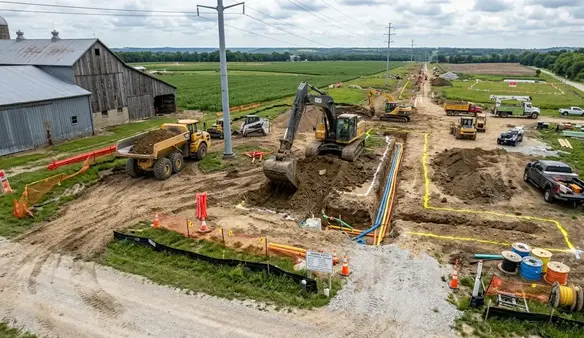
Dedicated utility corridors help large rural properties stay organized, making future expansion of water, electric, fiber, agricultural infrastructure, and additional buildings significantly easier and more cost-effective.
Planning Multiple Buildings or Future Expansion?
Utility corridors can save thousands in future excavation costs by keeping water, electric, gas, fiber, and drainage systems organized from the beginning.
We help property owners plan utility routes that support future shops, barns, homes, livestock facilities, and additional infrastructure.
Schedule a Property Planning ConsultationUtility Challenges Unique To North Missouri Acreage Properties
Utility trenching across North Missouri differs significantly from trenching on a typical subdivision lot.
-
Long Utility Runs
Rural homes frequently sit hundreds of feet from public utility connections. -
Seasonal Drainage Swales
Many properties contain low areas that only become active during heavy rain events. -
Agricultural Traffic
Tractors, grain trucks, livestock trailers, and heavy equipment influence utility placement decisions. -
Timber & Shelterbelts
Existing tree lines often affect trench routing and future maintenance access. -
Multi-Generation Property Development
Many rural properties eventually add additional homes, cabins, or agricultural structures.
Why North Missouri Property Owners Trust Us for Utility Trenching
Precision Excavation
Utility trenches must follow exact depth and grade requirements. We excavate with accuracy so utilities perform reliably and meet installation standards without costly corrections.
Rural Property Expertise
North Missouri terrain, clay soils, and long distances require a different approach than suburban trenching. We understand how farms, acreages, and large tracts behave through the seasons.
Long Distance Utility Runs
Large properties often need hundreds or thousands of feet of trenching. We plan routes that maintain depth, avoid low spots, and stay clear of future buildings and driveways.
Future Development Planning
Many properties grow over time. We design utility corridors that support future shops, barns, cabins, and fiber upgrades without re‑digging the entire property.
Safe and Code‑Ready Installations
Proper spacing, bedding, and conduit protection are essential for long‑term safety. We prepare trenches that meet utility provider requirements and protect your investment.
Built for Real Farm and Equipment Use
Rural utilities must withstand tractors, semis, livestock, and seasonal soil movement. We build trenches that hold up under real‑world conditions, not just ideal ones.
Our Utility Trenching Process
Site Evaluation
We walk the property, identify utility paths, review soil conditions, and locate existing underground lines. This prevents conflicts and ensures the trench follows the safest and most efficient route.
Route Planning
We map the trench path around future buildings, driveways, drainage paths, and equipment lanes. Good planning keeps utilities accessible and prevents costly relocations later.
Precision Trenching
We dig to exact depth and grade requirements for each utility type. Consistent trench bottoms protect pipes, conduit, and fiber from stress and settling.
Utility Installation Support
We prepare the trench for safe placement of conduit, pipe, or fiber. Proper bedding and spacing help ensure long‑term performance and easier future service.
Backfill and Compaction
We restore the trench with the right materials and compaction to prevent settling, washouts, or frost issues. A stable backfill protects the utility for decades.
Final Inspection
We verify depth, alignment, compaction, and surface restoration. This final check ensures the trench is ready for utility activation and future property improvements.
Utility Trenching Service Area Across North Missouri
We provide professional utility trenching services across North Missouri including water line trenching, electrical conduit installation, gas line excavation, fiber optic trenching, and drainage utility systems. Every trench is excavated with precision depth control, safe routing, and proper bedding preparation to ensure underground utilities perform reliably for decades.
From rural farms and acreage properties to residential builds and commercial developments, we install and prepare underground utility pathways designed to handle Missouri soil conditions, freeze-thaw cycles, and long-term ground movement. Our trenching process includes route planning, safe excavation, utility separation, backfill compaction, and site restoration to leave your property clean, stable, and ready for the next phase of construction or installation.
- Liberty, MO
- Smithville, MO
- Plattsburg, MO
- St. Joseph, MO
- Maryville, MO
- Chillicothe, MO
- Trenton, MO
- Hamilton, MO
- Gallatin, MO
- Cameron, MO
- Bethany, MO
- Princeton, MO
- Brookfield, MO
- Macon, MO
- Stanberry, MO
- King City, MO
- Albany, MO
- Jamesport, MO
- Lancaster, MO
- Unionville, MO
- Green City, MO
- Milan, MO
- Savannah, MO
- Rural North Missouri Farms, Acreage & Development Properties
If you need professional utility trenching anywhere in North Missouri, we can evaluate your site, plan safe utility routes, handle precise excavation, and prepare your property for water, electric, gas, fiber, or drainage installation.
Questions Smart Property Owners Ask Before Installing Utilities
-
Will this utility route interfere with future buildings?
A line placed in the wrong spot can block a future shop, garage, or addition. Smart planning keeps your building options open. -
Is the route protected from future drainage problems?
Utilities laid in natural water paths often wash out or freeze. Good trenching avoids low spots and runoff channels. -
Do I need spare conduit for future expansion?
Adding a second power line or fiber later is far cheaper when a spare conduit is already in place. -
Will heavy equipment eventually cross this area?
Driveways, concrete trucks, and farm equipment can crush shallow lines. If traffic is expected, the trench must be built for it. -
Is the trench deep enough for Missouri winters?
Frost depth varies across North Missouri. A line buried too shallow will freeze no matter how new it is. -
What happens if I add another structure later?
Planning for future buildings prevents expensive relocations and keeps your utility corridor clean and organized.
If nobody is asking these questions before trenching begins, important long‑term planning is being missed, and that usually means paying twice later.
Have Questions About Utility Placement on Your Property?
Every property is different. We can help determine the best routes for water, electric, gas, fiber, drainage systems, and future expansion before excavation begins.
Talk With an Excavation ExpertUtility Projects We Commonly Support
New Home Construction
Complete utility trenching for new residential builds including water, electric, gas, fiber, and drainage. We coordinate routes around foundations, driveways, and future landscaping to avoid costly relocations later.
Barndominiums
Modern barndominiums often require long utility runs, multiple service points, and careful planning for future additions. We design utility corridors that support both living space and shop space without conflict.
Farm and Ranch Improvements
Water lines, hydrants, livestock systems, and agricultural electrical service. These projects are frequently part of larger farm and ranch development We build trenches that withstand equipment traffic, soil movement, and year‑round farm use.
Shop and Outbuilding Construction
Utility support for machine sheds, garages, workshops, and commercial outbuildings. We plan routes that stay clear of future concrete pads and allow for easy service upgrades.
Fiber Internet Expansion
Trenching for rural broadband and fiber optic conduit. We install smooth, consistent routes that protect delicate fiber and allow future pulls without re‑digging.
Property Development
Utility corridor planning for multi‑phase builds, subdivisions, and large rural tracts. Utility installation often follows land clearing and precedes final site grading. We help property owners organize utilities so expansion stays simple and cost‑effective.
What We Often Discover During An On-Site Utility Consultation
Property owners often have a utility route in mind before we arrive. Sometimes that route works perfectly. Other times a quick walk of the property reveals issues that could create major expenses later.
-
Natural Water Paths
Areas that look dry during summer may become drainage channels during spring rains. -
Future Driveway Expansion
What begins as a narrow gravel entrance often becomes a wider access road later. -
Better Building Locations
Drainage, views, access, and grading sometimes make another building location more practical. -
Unexpected Grade Changes
Elevation differences can affect utility depth requirements and installation costs.
The route that looks best on paper isn't always the route that makes the most sense once we walk the property.
Not Sure Where Utilities Should Go?
Every property is different. We can evaluate drainage, future building locations, driveway plans, and utility requirements before excavation begins.
Call To Discuss Your Project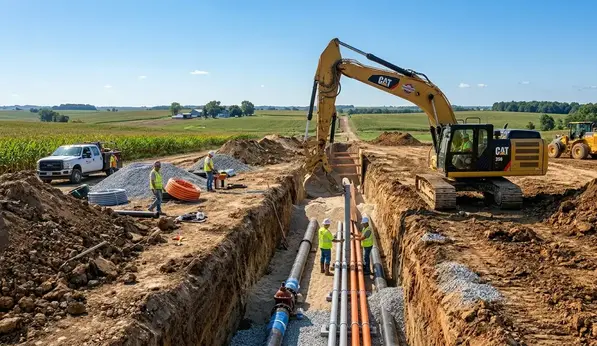
Well-planned underground utility infrastructure provides reliable access to water, electric, gas, fiber optic communications, and future property expansion while protecting long-term development potential across North Missouri properties.
Utility Trenching Pricing Overview
Utility trenching costs vary depending on trench length, depth, utility type, soil conditions, rock excavation requirements, site accessibility, and restoration work. The ranges below reflect many of the utility trenching projects we commonly perform throughout North Missouri.
Short Residential Utility Runs
$1,500 – $4,500+Water lines, electrical conduit, propane lines, and small utility connections serving homes, shops, garages, and outbuildings.
Long Rural Utility Installations
$3,500 – $15,000+Extended utility runs across acreage, farms, ranches, and rural properties requiring significant trenching distances.
Water & Sewer Trenching
$2,500 – $12,000+Utility trenches requiring grade control, frost-depth compliance, bedding material, and utility separation.
Commercial Utility Infrastructure
$10,000 – $50,000+Multi-utility corridors, site infrastructure installation, development projects, and commercial utility preparation.
What Affects Utility Trenching Costs?
No two trenching projects are priced exactly the same. Several factors influence equipment requirements, labor, excavation difficulty, and overall project duration.
- Utility type (water, sewer, electric, gas, fiber)
- Total trench length
- Required trench depth
- Rock excavation or limestone removal
- Existing utility conflicts
- Driveway and roadway crossings
- Soil conditions and groundwater
- Backfill and compaction requirements
- Site accessibility for equipment
- Restoration and final grading needs
Frequently Asked Questions About Utility Trenching in North Missouri
Utility trenching in North Missouri involves more than simply digging a ditch. Water lines, electrical conduit, gas lines, fiber optic installations, and drainage utilities all require precise depth control, proper bedding, safe separation distances, and careful planning to avoid future failures. Rural properties across Daviess, Harrison, Livingston, Mercer, Grundy, and surrounding counties often present clay soil, rock layers, long run distances, and uneven terrain that make professional trenching essential. These FAQs address the most common concerns property owners have before starting underground utility work.
- What does a professional utility trenching project include?
- A complete utility trenching project includes locating the utility route, checking for existing underground lines, precision excavation to required depths, trench shaping and safety grading, bedding preparation for pipes or conduit, backfill with proper compaction, and final site restoration. The goal is to create a safe underground pathway that protects utilities long-term and prevents shifting, crushing, or failure.
- Do I need permits for utility trenching in North Missouri?
- Some utility trenching projects require permits depending on county rules, municipality regulations, and utility type. Projects involving public utility connections, road crossings, drainage modifications, or new service installations may require approval. We help identify permit requirements and coordinate with local guidelines before work begins.
- How do you handle existing underground utilities before trenching?
- Before any trenching begins, existing utilities must be located and verified. This includes electric lines, water mains, gas lines, septic systems, and communication cables. We take steps to avoid conflicts with existing infrastructure and reduce the risk of service interruption or equipment damage during excavation.
- Can you trench in rocky, clay, or difficult rural soil?
- Yes. North Missouri soil conditions vary widely from heavy clay to rocky subgrade and soft agricultural ground. We regularly trench through all of these conditions using appropriate excavation equipment and techniques to maintain depth accuracy and trench stability.
- What happens if trench depth or slope is incorrect?
- Incorrect trench depth or slope can lead to serious long-term problems including frozen water lines, electrical conduit damage, gas line stress, drainage failure, or fiber optic signal issues. Proper depth control and consistent grading are critical to ensuring utilities function safely and reliably over time.
- How do you handle water line trenching?
- Water line trenching requires proper depth below frost line, stable bedding material, and careful backfill to prevent pipe shifting or freezing. We ensure correct slope when needed, protect against seasonal ground movement, and prepare the trench for long-term water system reliability.
- Can you trench for electrical conduit safely?
- Yes. Electrical trenching requires precise depth, separation from other utilities, and safe conduit placement. We prepare clean, properly graded trenches that allow licensed electricians to install conduit safely while meeting code requirements.
- Do you handle long rural utility runs across farms or acreage?
- Yes. We specialize in long-distance trenching across rural properties, including farms, hunting land, and large acreage developments. These projects often require careful route planning to manage elevation changes, drainage paths, and access for equipment.
- How do you prevent trench collapse or safety issues?
- Trench safety depends on soil stability, depth, and proper excavation technique. We evaluate ground conditions before digging, use safe sloping or shoring methods when needed, and maintain controlled excavation practices to reduce collapse risk and protect surrounding structures.
- What happens after the utilities are installed?
- After utilities are placed, we perform proper backfilling in layers with compaction to prevent future settling. The surface is then graded and restored to maintain drainage flow and prepare the area for landscaping, construction, or continued use.
- How long does utility trenching take?
- Small residential trenching projects can often be completed in a single day. Larger rural utility runs, multi-utility installations, or difficult terrain projects may take several days depending on length, soil conditions, weather, and equipment access.
- How is utility trenching priced in North Missouri?
- Pricing depends on trench length, depth requirements, soil conditions, terrain difficulty, and site accessibility. Rocky ground, long rural runs, and multi-utility installations can increase project scope. The most accurate pricing comes from an on-site evaluation.
- Can you trench for fiber optic internet installation?
- Yes. Fiber optic trenching requires shallow, precise excavation with careful routing to protect cables from damage. We prepare clean trenches suitable for broadband and rural internet expansion projects across North Missouri.
- Can you install drainage utility lines as part of trenching?
- Yes. We install trenches for drainage systems such as French drains, culvert tie-ins, and subsurface water control systems. Proper slope and gravel bedding help ensure water moves efficiently away from structures and low areas.
- What happens if rock or obstacles are found underground?
- Rock shelves, buried debris, and unknown subsurface obstacles are common in North Missouri. If encountered, we adjust excavation methods using specialized equipment to maintain trench integrity and required depth while minimizing disruption to the surrounding site.
- Can utility trenching be done during winter?
- Yes, utility trenching can often be performed in winter depending on frost depth, snow cover, and ground conditions. Frozen soil can sometimes improve access in soft areas, but extreme cold or heavy precipitation may affect scheduling and excavation efficiency.
- Can you prepare the site for utilities and full construction at the same time?
- Yes. Utility trenching is commonly performed alongside site preparation and excavation , building pad construction , and grading and drainage improvements . Coordinating these steps together improves efficiency and reduces overall project cost.
Ready to Bring Utilities to Your Property the Right Way?
Whether you're installing electric service, rural water lines, sewer connections, fiber optic cable, propane lines, or utilities for a new home, shop, barn, or commercial project, we can provide the trenching needed to get the job done safely and efficiently.
Call now for a site evaluation, utility trenching consultation, and a clear plan for routing utilities across your property.
Call Today (660) 371-5901