
Land Grading & Drainage Solutions in North Missouri
Professional land grading, drainage correction, erosion control, and water management solutions across North Missouri. We reshape terrain, correct slopes, install drainage swales, and build engineered runoff systems that protect homes, driveways, farms, and commercial properties from standing water and erosion damage. Every project is designed around proper elevation, soil conditions, and natural water flow to ensure long-term performance and prevent recurring drainage issues.
Serving Chillicothe, Kirksville, Cameron, Trenton, Bethany, Moberly, St. Joseph, Maryville, Brookfield, Macon, and surrounding North Missouri farms, acreage, residential, and commercial properties.
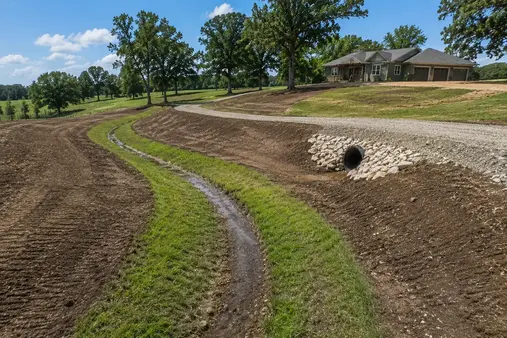
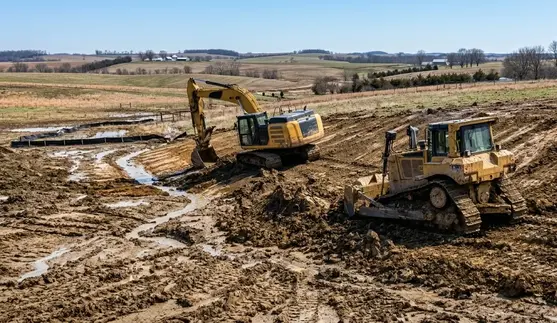
Heavy grading equipment is used to reshape slopes, correct elevation issues, and establish proper water flow patterns across rural and residential properties.
Why Water Problems Get Worse Every Year If They Aren't Fixed Correctly
Most drainage issues start small. A little standing water after a storm. A soft area in the yard. Minor erosion around a driveway entrance. Property owners often ignore these warning signs because the damage seems manageable at first.
The problem is that water rarely fixes itself. Every storm event removes a little more soil, deepens erosion channels, weakens driveway bases, saturates clay soils, and increases the likelihood of foundation problems.
Across North Missouri, heavy clay soils make drainage issues even worse. Water remains trapped longer, runoff accelerates during storms, and poorly graded properties often develop chronic wet spots that never completely dry out.
Proper grading and drainage correction address the root cause by controlling how water moves across the property rather than constantly repairing the damage it creates.
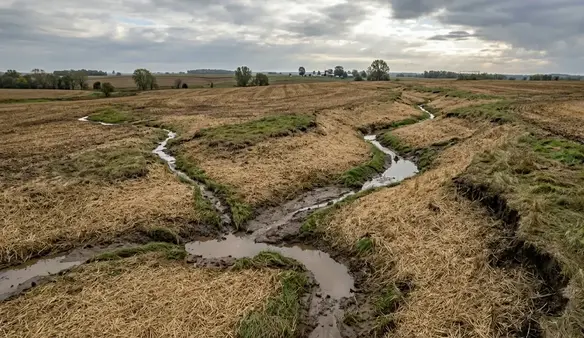
Uncontrolled runoff creates deep erosion channels that expand every season and permanently remove usable soil from the property.
Grading & Drainage Services We Provide Across North Missouri
Property Regrading
Reshaping land elevations to improve drainage and eliminate standing water problems. Proper regrading is often performed before building pad and foundation preparation to ensure structures remain dry and stable long-term.
Drainage Swales
Engineered surface drainage channels that guide runoff away from homes, barns, and low‑lying areas. Properly built swales slow and redirect water so it drains naturally without causing erosion or foundation issues.
Culvert Installation
Properly sized culverts for driveways, road crossings, and drainage corridors. Many drainage improvements are completed alongside driveway and private road construction projects to improve long-term access and stormwater control.
Erosion Repair
Repairing washouts, gullies, and runoff damage caused by uncontrolled water flow. In heavily wooded areas, erosion correction often follows land clearing services to stabilize disturbed soil and establish proper drainage patterns.
Driveway Drainage Correction
Improving driveway drainage to prevent washouts, rutting, and gravel loss. By shaping the surface and directing runoff into controlled flow paths, we extend driveway life and keep access reliable during heavy rains.
Water Diversion Systems
Redirecting stormwater away from homes, barns, shops, and critical infrastructure. Water diversion planning is especially important during farm and ranch development projects where drainage affects livestock areas, roads, and future structures.
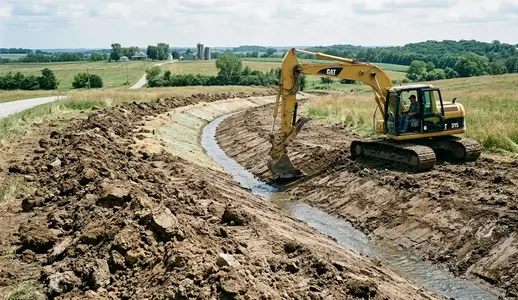
Drainage swales are engineered channels that safely guide stormwater across a property without causing erosion or flooding damage.
Common Drainage Problems in North Missouri Properties
Many rural and residential properties in North Missouri suffer from predictable water management issues caused by flat terrain, compacted clay soils, and inadequate grading during initial site preparation and excavation work.
These conditions often lead to chronic standing water, basement seepage, driveway erosion, and uncontrolled runoff that damages fields, pastures, and structures over time.
Without proper grading and engineered drainage solutions, these problems tend to repeat every storm cycle and gradually worsen with each season.
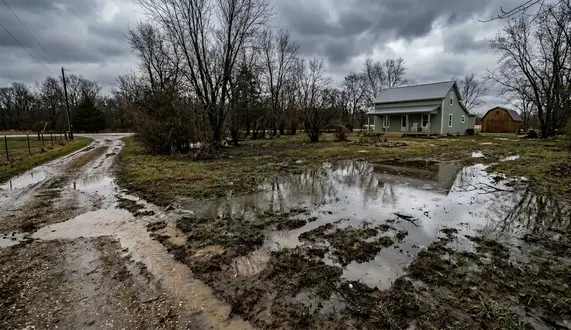
Standing water forms when clay soils become saturated and the property lacks proper slope or drainage outlets.
Already Seeing Signs Of Drainage Damage?
Erosion, standing water, driveway washouts, and foundation concerns typically worsen with every season. Proper grading and drainage solutions can help stop the damage before repairs become significantly more expensive.
Call (660) 371-5901Drainage Problems We Solve Every Year Across North Missouri
Across North Missouri, most drainage failures come from poor grading, undersized culverts, compacted clay soils, and uncontrolled runoff. While every property looks different on the surface, the underlying causes are often the same, and we fix these issues year after year for homeowners, farmers, and acreage owners who are tired of fighting the same problems.
Standing Water in Yards
Low spots and flat yards stay saturated for days in clay soil. We correct slope, reshape drainage paths, and create controlled outlets so water finally has somewhere to go.
Water Against Foundations
Improper grading sends water toward homes, barns, and shops. We regrade around structures to eliminate foundation pressure, basement leaks, and long‑term structural damage. Proper drainage is one of the most important components of foundation and building pad preparation.
Driveway Washouts
Gravel driveways fail quickly when runoff is uncontrolled. We install proper crowning, ditching, and culverts to keep driveways stable through heavy Missouri storms.
Pasture Flooding
Saturated pastures create mud, erosion, and livestock access issues. We improve runoff flow, stabilize gateways, and reshape low areas to keep fields usable year‑round.
Barn & Shop Drainage Issues
Water pooling around agricultural buildings leads to mud buildup and long‑term site deterioration. These issues are commonly addressed during farm and ranch site development projects. We correct grade, redirect flow, and create reliable access during wet seasons.
Severe Erosion Damage
Fast‑moving runoff carves gullies, removes topsoil, and damages roads and building sites. We slow, redirect, and control water to stop erosion at the source.
These problems rarely fix themselves. In fact, they almost always get worse as clay soils shift, runoff patterns deepen, and structures continue to take on water. The sooner drainage issues are corrected, the more money you save, and the longer your property stays usable and protected.
Get A Drainage Solution Designed For Your Land
Every property drains differently. We evaluate runoff patterns, slopes, soil conditions, and existing drainage systems to recommend practical solutions that work.
Request A Free EstimateWhat Actually Causes Drainage Problems in North Missouri
Drainage issues in North Missouri rarely come from a single source. They are usually the result of several local factors working together, including soil composition, slope changes, seasonal weather patterns, and how the land was originally shaped during construction or farming. Over time, even small imperfections in grade or runoff paths can turn into chronic water problems that affect yards, fields, driveways, and building foundations.
One of the biggest contributors is our region’s clay-heavy soil. North Missouri sits on dense, fine-textured clay that absorbs water slowly and releases it even slower. After a heavy rain, this soil swells, becomes sticky, and holds moisture like a sponge. That is why you often see water sitting for days in low spots, fencerows, or around barns, especially in areas like Livingston, Linn, Sullivan, and Grundy counties where clay layers run deep.
Improper grading during construction is another major cause. Many older farmsteads and rural homes were built quickly, with minimal attention to long-term water flow. Builders often shaped the ground “good enough for now,” leaving subtle dips, uneven slopes, or high spots that trap water. Over the years, settling soil, livestock traffic, and freeze–thaw cycles exaggerate these imperfections, creating new low areas and redirecting runoff in ways the original builder never planned for.
Natural drainage routes also get disrupted over time. Fallen trees, brush growth, silt buildup, and field edges filling in can block the paths water used to follow. Undersized or aging culverts, common on rural driveways and farm entrances, cannot keep up with today’s heavier rain events, causing water to back up and spill over. In many parts of North Missouri, road ditches are shallow or poorly maintained, sending stormwater directly onto private property instead of carrying it away.
Heavy equipment use is another overlooked factor. Tractors, skid steers, and livestock compact the soil, especially in gateways, around barns, and along fence lines. Compacted clay loses its ability to absorb water, turning these areas into chronic mud pits or runoff channels. Once the soil structure is damaged, it often takes regrading or mechanical correction to restore proper drainage.
Finally, North Missouri’s weather patterns play a role. We get long dry spells followed by sudden, intense storms. When hard, dry clay gets hit with fast rainfall, water cannot soak in quickly enough, so it sheets across the surface, carving ruts, washing out driveways, and overwhelming low areas. This cycle repeats year after year, gradually reshaping the land unless corrective grading or drainage improvements are made. In severe cases, runoff can create extensive erosion damage that requires excavation, reshaping, and long-term water management solutions similar to those used in commercial site preparation projects.
Drainage Problems Usually Have More Than One Cause
Clay soil, poor grading, undersized culverts, compacted ground, and blocked drainage routes often work together to create recurring water problems.
Identifying the real source of the issue is critical before investing money in drainage improvements.
Schedule A Property AssessmentHow We Diagnose Drainage Problems Before Moving Any Dirt
One of the biggest mistakes in the excavation industry is treating symptoms instead of identifying the actual source of the water problem. Standing water, driveway washouts, foundation moisture, and erosion are usually the result of larger drainage patterns occurring somewhere else on the property.
Before recommending any grading, culvert installation, or drainage improvements, we evaluate how water enters the property, where it concentrates, how it flows during storm events, and where it ultimately exits the site. Understanding the entire drainage system is critical to building a solution that actually works long term.
Drainage planning also includes identifying existing underground utilities. Projects involving drainage crossings or water management infrastructure may require coordination with utility trenching services for water lines, electrical service, gas lines, and fiber installations.
Elevation Analysis
We identify high spots, low spots, slope changes, and grade transitions that influence water movement across the property.
Water Flow Mapping
Existing drainage paths, runoff channels, ditch systems, swales, and natural water routes are evaluated to understand how stormwater behaves.
Soil Condition Assessment
Clay content, compaction levels, saturation zones, and soil stability all affect drainage performance and influence solution design.
Driveway & Culvert Inspection
Existing culverts, ditch crossings, driveway crowns, and road drainage systems are inspected for capacity and performance issues often associated with private roads and gravel driveways.
Structure Protection Review
We evaluate how water interacts with homes, barns, shops, foundations, retaining walls, and other critical improvements.
Outlet Evaluation
Every drainage system needs a safe discharge point. We determine where collected water can be released without creating new problems elsewhere.
Why Proper Diagnosis Matters
Two properties can have the exact same symptom and require completely different solutions. One wet area may need simple regrading, while another may require culvert replacement, runoff diversion, erosion stabilization, or major watershed management improvements.
The goal is not simply to move water somewhere else. The goal is to understand why the problem exists, where the water originates, how much water must be managed, and how to safely control it for years to come.
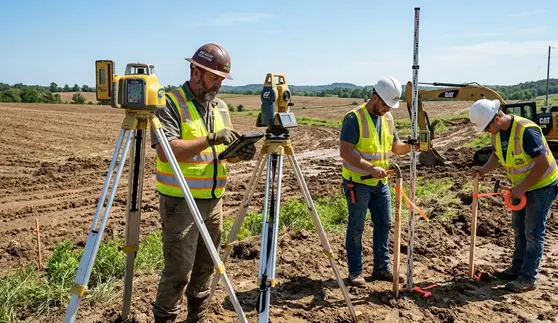
Proper drainage design begins with elevation mapping, water flow analysis, and identifying how runoff moves across the property.
How Professional Grading Actually Fixes Drainage Problems
Effective drainage correction is not about moving dirt randomly. It is about reshaping elevation and controlling how water moves across the land in every direction.
Many successful drainage projects overlap with site preparation, foundation preparation, and driveway construction because water management affects nearly every type of earthmoving project.
Regrading for Proper Slope
We reshape the land so water naturally flows away from structures instead of collecting in low areas.
Swales for Surface Flow Control
Shallow drainage channels guide stormwater safely across the property without erosion damage.
Culverts for Cross-Flow Drainage
Properly sized culverts allow water to pass under driveways and access roads without washouts.
Berms for Water Diversion
Raised soil barriers redirect incoming water away from vulnerable areas.
Compaction for Stability
Proper compaction ensures graded areas hold their shape through storms and seasonal changes.
Flow Testing & Verification
We confirm real-world water movement before completing the project to ensure long-term performance.
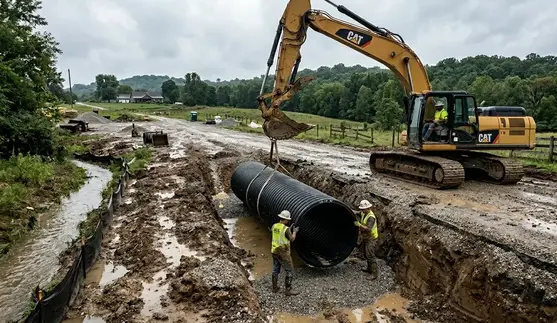
Properly sized culverts allow water to pass under driveways and roads without washouts or flooding.
What Happens When Drainage Problems Are Ignored
Most drainage issues start small, a soft spot in the yard, a little erosion, a puddle that lingers after storms. But in North Missouri’s clay-heavy soils, these “minor” problems rarely stay minor. Water damage compounds over time, and the longer it goes unaddressed, the more expensive the repairs become.
Drainage failures can become especially costly on commercial properties where erosion, standing water, and access issues disrupt operations. Proper commercial site preparation helps prevent these problems before construction begins.
Here are the most common long-term consequences of ignoring drainage problems:
-
Foundation Damage
Water pooling near structures increases hydrostatic pressure, leading to cracks, settling, and moisture intrusion. Many foundation issues begin with poor grading that was never corrected. -
Driveway Failure
Uncontrolled runoff weakens the base layer beneath gravel or asphalt. Over time, this causes rutting, washouts, potholes, and complete driveway collapse during heavy storms. -
Erosion Expansion
Small washouts grow into deep gullies as each storm cuts the soil further. What starts as a shallow rut can turn into a major land‑loss problem if left untreated. -
Property Value Loss
Persistent drainage issues reduce usability, damage structures, and make properties harder to sell. Buyers notice standing water, erosion, and failing driveways immediately.
Drainage problems do not fix themselves. In fact, they accelerate as soil shifts, runoff patterns deepen, and water continues to undermine structures and roads. Addressing issues early is always more cost‑effective than repairing the damage later.
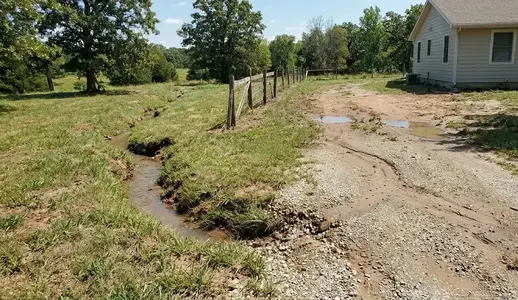
Drainage problems rarely stay small. Uncontrolled runoff can gradually lead to erosion, driveway failure, foundation concerns, and widespread property damage.
Stop Drainage Problems Before They Become Major Repairs
Erosion, standing water, driveway washouts, and foundation concerns can worsen with every storm. Professional grading and drainage solutions help protect your property long-term.
Call for Free EstimateUnderstanding How Water Moves Across Land
Most property owners focus on where water collects, but drainage professionals focus on where the water starts. Standing water is almost never the true problem. It is the final symptom of a larger flow pattern that often begins hundreds of feet uphill, across a neighboring field, or along a compacted equipment path.
Here are the key principles that determine how water actually behaves on North Missouri land:
-
Water Always Follows the Path of Least Resistance
Even a one‑inch elevation change can redirect hundreds of gallons during a storm. On rural properties, water often follows tire ruts, livestock trails, compacted clay, or old fence lines long before it reaches the area where it finally pools. -
Runoff Accelerates as It Moves Downhill
As water gains speed, it concentrates into narrow flow paths. This is why small dips in pastures or driveways can turn into deep ruts after a single heavy rain. In areas like Livingston and Sullivan counties, long gentle slopes can carry water surprisingly far before it slows down. -
Existing Channels Control More Water Than You Think
Natural swales, shallow ditches, and even barely visible depressions act like highways for stormwater. When these channels are blocked by brush, silt, or old fill dirt, water immediately seeks a new route, often straight toward buildings, barns, or driveways. -
Soil Compaction Changes Water Behavior
Hard clay from equipment traffic, livestock, or repeated vehicle use becomes nearly waterproof. Instead of soaking in, water sheets across the surface and gathers in low areas. This is one of the biggest hidden causes of yard and pasture drainage failures in North Missouri. -
Watershed Behavior Determines the Whole System
A property is part of a larger watershed, whether it is five acres or fifty. This is especially important when planning pond construction projects where watershed behavior directly affects water retention and overflow management. Water entering from uphill neighbors, road ditches, or natural slopes must be accounted for. Fixing only the low spot ignores the upstream forces that created the issue in the first place. -
Discharge Points Matter as Much as Collection Points
Moving water away from one problem area is not enough. It must be directed to a stable, controlled outlet that will not erode, flood, or create new issues elsewhere on the property.
Effective drainage is not about pushing water away from a single location. It is about managing the entire flow path from where the water begins to where it safely exits the property. When grading is designed with full watershed behavior in mind, you get long‑term performance instead of short‑term fixes.
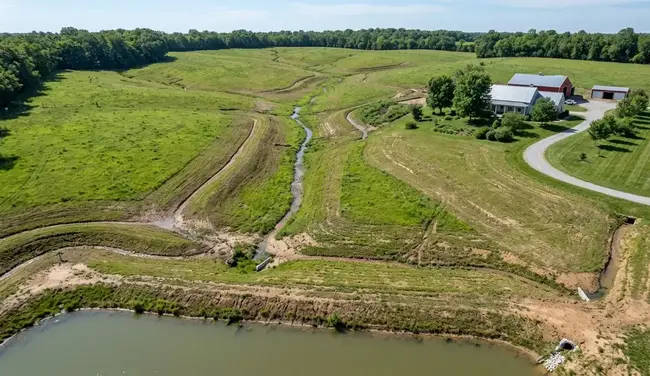
Effective drainage starts by understanding the entire watershed. Water often originates hundreds of feet away from where the actual problem appears.
Not Sure Where Your Drainage Problem Is Coming From?
Water often originates far away from where damage appears. We identify runoff sources, drainage paths, and watershed influences to find the true cause of drainage issues.
Schedule A Site EvaluationSigns Your Property Needs Grading or Drainage Correction
Most drainage problems don’t start as major failures. They begin as small warning signs that gradually get worse after every storm. In North Missouri, clay-heavy soils and flat terrain make these issues especially persistent.
Standing Water After Rain
If water sits in your yard or field for hours or days, your property likely lacks proper slope or has blocked drainage paths.
Driveway Washouts or Ruts
Gravel or dirt driveways that erode after storms indicate uncontrolled runoff or missing culvert support.
Soggy or Spongy Ground
Areas that never fully dry out are usually low spots where water is trapped beneath the surface.
Erosion Channels Forming
Small gullies or ruts forming after rainfall are a sign that water is cutting into unprotected soil.
Water Near Foundations
Pooling near homes, barns, or shops increases risk of structural damage and basement leaks over time.
Uneven or Settling Ground
Shifting soil often indicates poor drainage or repeated water saturation beneath the surface.
Our Grading & Drainage Process
1. Site Evaluation
We walk the property, check elevations, identify water paths, and pinpoint the exact spots causing erosion or pooling.
2. Drainage Planning
We map out how water naturally wants to move and design a plan that works with the land, not against it.
3. Earthwork & Regrading
We cut high spots, fill low spots, and shape the ground so water flows where it should instead of where it shouldn’t.
4. Installation
We install culverts, swales, berms, and diversion features sized for Missouri rainfall, not guesswork.
5. Final Compaction
We compact and finish the graded areas so they hold their shape through storms, freeze‑thaw cycles, and heavy use.
6. Water Testing
We run water through the system to confirm everything drains exactly as designed before we call the job complete.
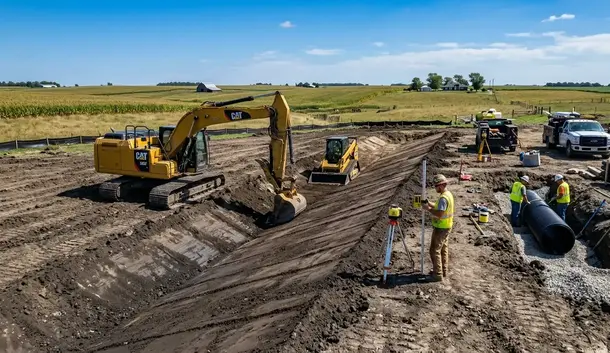
Proper drainage correction combines site analysis, grading expertise, earthmoving precision, and carefully designed water management systems.
Ready To Fix Your Drainage Problems The Right Way?
Our process is designed to identify the root cause of water issues and create long-term drainage solutions that perform season after season.
Call Today (660) 371-5901Common Drainage Mistakes Homeowners Make
Most drainage failures do not come from storms. They come from well‑intentioned fixes that do not address the real cause of water movement. Small mistakes can turn a manageable issue into a long‑term problem that costs far more to correct later.
Here are the most common errors we see on rural and semi‑rural properties:
-
Adding Dirt Without Regrading
Dumping dirt into a low spot only creates a temporary mound. Water still collects around it, and the fill eventually settles, bringing the problem right back. Without reshaping the slope, the water has nowhere to go. -
Using Undersized Culverts
A culvert that is too small for Missouri rainfall will clog, overflow, or wash out a driveway. We often replace 8 inch culverts with 12 or 15 inch units because modern storm intensity demands larger flow capacity. -
Adding Gravel Without Fixing the Base
Gravel poured over soft, saturated, or ungraded soil will rut almost immediately. Without correcting the base layer and slope, the gravel simply sinks into the mud. -
Ignoring Upstream Water Sources
Many drainage problems start outside the property line. Road ditches, neighboring fields, and natural slopes often send water downhill. Fixing only the yard does nothing if the upstream flow is not accounted for. -
Skipping Compaction Work
Even perfectly shaped soil will settle if it is not compacted correctly. Uncompacted areas sink after the first heavy rain, destroying the grade and reopening the drainage issue. -
Relying on Temporary Fixes
Sandbags, loose gravel, and quick patches do not control water long term. Proper drainage requires intentional flow design, not short‑term band aids.
Good drainage is engineered, not guessed. Avoiding these mistakes saves money, protects your property, and prevents years of recurring water problems.
Why North Missouri Clay Soils Create Persistent Drainage Problems
North Missouri is dominated by dense, high‑plasticity clay soils that behave very differently from sandy or loamy soils. These clay layers are extremely fine and pack tightly together, slowing infiltration and keeping rainfall near the surface long after storms pass. This is why properties across Livingston, Linn, Sullivan, and Grundy counties often stay wet for days even after moderate rainfall.
Here are the specific ways our regional clay creates long‑lasting drainage challenges:
-
Clay Holds Water Instead of Letting It Drain
Once clay becomes saturated, it stops absorbing water entirely. Even a light rain can create standing water, muddy access roads, and soft building pads because the soil simply cannot take in more moisture. This is one of the biggest reasons rural properties struggle with persistent wet spots. -
Clay Expands When Wet and Shrinks When Dry
This constant movement puts stress on foundations, barn pads, and gravel driveways. Wet clay swells upward, then contracts during dry spells, creating cracks, dips, and shifting surfaces. Many drainage issues in North Missouri are actually caused by this seasonal soil movement. -
Clay Creates Hard, Compacted Surfaces
When clay dries, it becomes extremely dense and nearly waterproof. Water then sheets across the surface instead of soaking in, carving ruts and overwhelming low areas. This is especially common on equipment paths, livestock routes, and older driveways where compaction is severe. -
Clay Layers Trap Water Beneath the Surface
Many properties have mixed soil layers from past construction or farming. A thin top layer may drain decently, but the clay layer beneath it traps water like a bowl. This hidden saturation softens building pads, kills grass, and causes driveways to fail from underneath. -
Runoff Increases Dramatically Once Clay Is Saturated
When the soil cannot absorb more water, every additional drop becomes surface runoff. This is why even gentle slopes can develop erosion channels or washouts during Missouri’s intense summer storms. Saturated clay amplifies runoff far more than most property owners realize.
Understanding how local clay behaves is the foundation of effective drainage design. A grading plan that works in sandy or loamy regions will fail quickly in North Missouri if it does not account for soil expansion, compaction, and slow infiltration. When drainage solutions are built around real soil behavior, they last longer, perform better, and prevent recurring water problems.
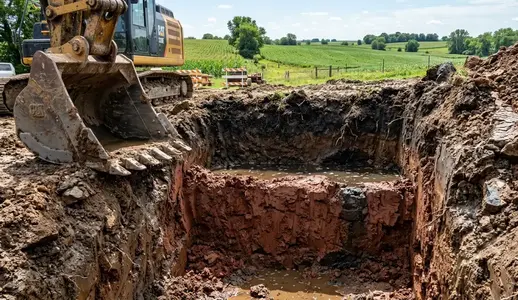
Dense clay soils absorb water slowly and often trap moisture beneath the surface, creating many of the drainage challenges commonly seen across North Missouri.
Fix North Missouri Clay Drainage Problems Before They Get Worse
Get a professional drainage and grading plan designed specifically for dense clay soils before standing water, erosion, and subsurface saturation cause costly property damage.
Call for a Site EvaluationWhy Property Owners Hire Us Instead of Attempting Drainage Repairs Themselves
Drainage problems often appear simple until the first major storm proves otherwise. Moving dirt is easy. Moving dirt correctly so water behaves differently for years to come requires experience, equipment, and an understanding of how runoff behaves across an entire property.
-
Drainage Depends on Elevation
Even small grading errors can redirect water toward buildings, roads, or neighboring properties. -
Professional Equipment Matters
Large-scale grading, compaction, ditch construction, and culvert installation require equipment designed for earthmoving accuracy. -
We Solve Causes, Not Symptoms
Most DIY repairs focus on where water collects rather than where the water originates. -
Long-Term Results Save Money
A properly engineered drainage solution is often less expensive than repeatedly repairing the same problem every year.
What Does Grading & Drainage Work Cost in North Missouri?
One of the most common questions property owners ask is how much grading and drainage work costs. The honest answer is that every property drains differently, every soil condition is different, and every drainage problem requires a different solution.
Be cautious of contractors who provide pricing without seeing the property. Proper grading work depends on elevations, drainage patterns, access conditions, soil types, water volume, culvert sizing requirements, and the amount of earthmoving required to permanently solve the problem.
Minor Drainage Corrections
$1,500 – $4,000+
- Small grading adjustments
- Minor standing water correction
- Localized drainage improvements
- Small swales or runoff channels
- Spot erosion repairs
Driveway Drainage & Culvert Projects
$2,500 – $10,000+
- Culvert replacement
- Driveway washout repair
- Ditch regrading
- Roadside drainage improvements
- Entrance reconstruction
Property Regrading Projects
$5,000 – $20,000+
- Large-scale elevation correction
- Water diversion systems
- Foundation drainage correction
- Major runoff management
- Extensive earthmoving operations
Farm & Acreage Drainage Projects
$10,000 – $50,000+
- Pasture drainage improvements
- Field runoff control
- Agricultural water management
- Large ditch systems
- Multiple culvert installations
Factors That Affect Pricing
The biggest cost drivers include the amount of soil that must be moved, haul distances, culvert size and material, access limitations, existing erosion damage, drainage complexity, site conditions, and whether imported gravel, rock, or stabilization materials are required.
Properties with severe erosion, recurring flooding, collapsed culverts, foundation drainage issues, or extensive regrading needs generally require more equipment time and material than simple surface drainage corrections.
The most accurate way to determine cost is through an on-site evaluation where elevations, runoff patterns, soil conditions, and drainage failures can be assessed in person.
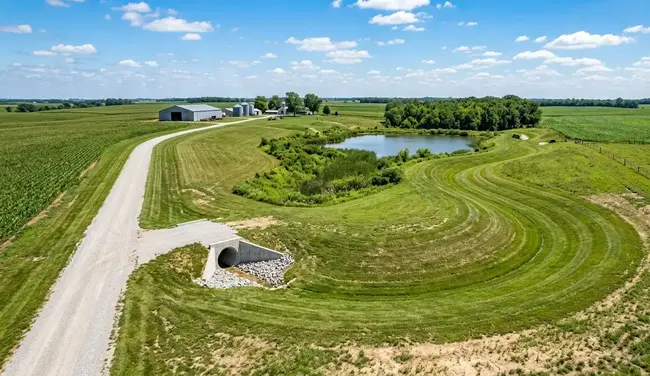
Finished grading creates stable slopes that direct water safely away from structures and prevents future erosion.
Stop Water Damage Before It Gets Expensive
Professional grading and drainage solutions protect your property, extend driveway life, and prevent long-term erosion damage across North Missouri.
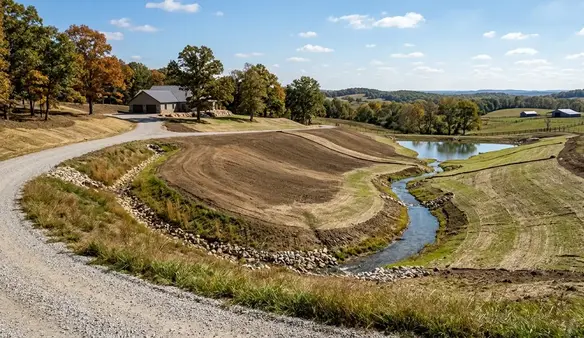
Farm drainage systems improve pasture usability by controlling runoff, reducing mud, and protecting soil structure.
Drainage Solutions for Every Type of Property
Every property in North Missouri drains differently based on soil type, elevation, and how the land is used. Clay-heavy ground, rolling terrain, and rural access routes all influence how water moves. We design grading and drainage solutions based on real site behavior, not a generic template.
Here are the types of properties we work on most often:
-
Residential Properties
From yard pooling to wet basements, homes often suffer from poor slope around foundations. We correct grading, improve runoff paths, and stabilize driveways so water flows away from the house instead of toward it. -
Farm and Ranch Land
Pastures, feed areas, and equipment routes take a beating during wet seasons. We improve field drainage, reduce mud around barns and gates, and keep access roads usable year round. -
New Construction Sites
Proper grading before the foundation goes in prevents future water problems. We shape building pads, establish drainage routes, and ensure the site is ready for utilities and concrete work. -
Commercial Lots
Large roofs and paved surfaces create heavy runoff. We manage flow, prevent parking lot flooding, and ensure water moves safely to designated drainage areas. -
Rural Acreage
Large tracts of land often have natural low spots, seasonal creeks, and uneven terrain. We correct broad flow patterns, stabilize slopes, and improve access across the property. -
Driveway Systems
Long gravel driveways and private access roads are prone to washouts and rutting. We install proper crowns, ditches, and culverts to keep them stable through heavy Missouri storms.
No two properties drain the same. The right solution depends on how your land is shaped, how you use it, and where the water naturally wants to go.
Warning Signs Your Property Needs Drainage Correction
Drainage problems rarely appear all at once. They start as small, easy‑to‑ignore symptoms that gradually turn into major grading failures, structural issues, and expensive repairs. In North Missouri’s clay‑heavy soils, these warning signs are especially important to catch early because water lingers longer and causes faster deterioration.
-
Standing Water Lasts More Than 24–48 Hours
Persistent puddles signal that the soil is saturated or the grade is trapping water. In clay soils, this often means the ground is already at full capacity and cannot absorb more. -
Driveways Develop Ruts, Washouts, or Potholes
Gravel driveways fail quickly when runoff is uncontrolled. If you see repeated rutting after storms, the slope or drainage path is not functioning correctly. -
Basements or Foundations Show Moisture Intrusion
Water near a foundation is one of the most serious warning signs. Poor grading, gutter discharge, or saturated clay can push moisture into basements and crawl spaces. -
Erosion Channels Keep Getting Deeper
When water cuts the same path repeatedly, it carves deeper channels each year. This is a clear sign that runoff velocity is too high and needs to be redirected or slowed. -
Grass Dies in Low, Wet Areas
Constant saturation suffocates roots. If grass never thrives in certain spots, the soil is staying wet far too long. -
Fence Posts Lean or Shift
Clay expansion and contraction can push posts out of alignment. This is often an early indicator of soil movement caused by poor drainage. -
Water Flows Toward Buildings During Storms
Any slope directing water toward a structure is a major red flag. This is one of the most common causes of foundation damage in rural Missouri. -
Pastures Stay Muddy Long After Rain
Livestock areas and gateways often become unusable when clay soils stay saturated. This indicates poor runoff control or compacted soil layers. -
Culverts Frequently Clog or Overflow
Undersized or improperly set culverts cannot handle modern storm intensity. Overflowing culverts are a sign that the drainage system is undersized or misaligned. -
Existing Drainage Improvements No Longer Work
Swales fill in, culverts settle, and grades shift over time. If old fixes are failing, the underlying water patterns have changed and need to be reassessed.
Many property owners tolerate these issues for years, hoping they will improve on their own. Unfortunately, drainage problems almost always worsen over time as erosion deepens, soil shifts, and water damage spreads. Early correction is far more cost‑effective than repairing long‑term damage.
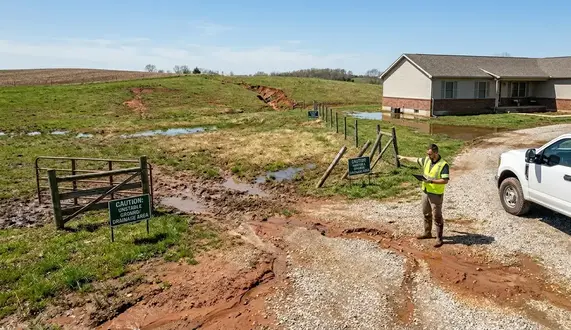
Persistent standing water, driveway rutting, erosion channels, saturated soil, and water collecting near structures are all signs that a property's drainage system is no longer functioning correctly.
Seasonal Drainage Challenges Across North Missouri
Drainage problems in North Missouri shift dramatically throughout the year. Our clay-heavy soils, rolling terrain, and unpredictable weather patterns mean that effective grading must be designed for all four seasons, not just spring storms. Each season exposes different weaknesses in a property’s drainage system.
Here is how each season affects water movement across the region:
-
Spring Rainfall
Spring brings long-duration rains that saturate clay soils quickly. This is when standing water, flooded low spots, soft pastures, and driveway washouts become most obvious. Many homeowners first notice drainage failures in April and May when the ground simply cannot absorb more moisture. -
Summer Thunderstorms
North Missouri’s summer storms are short, intense, and capable of dropping large amounts of water in minutes. These high‑intensity bursts overwhelm undersized culverts, shallow ditches, and poorly shaped swales. Runoff accelerates quickly on dry, compacted clay, carving ruts and eroding slopes. -
Fall Maintenance Season
Fall is one of the best times to perform grading and drainage improvements. The soil is workable, vegetation is thinning, and rainfall is moderate. Correcting drainage in the fall prevents winter freeze‑thaw damage and ensures the property is ready for spring storms. -
Winter Freeze–Thaw Cycles
Winter is especially hard on North Missouri clay. Repeated freezing and thawing causes soil expansion and contraction, which shifts driveways, deforms drainage swales, and settles culverts. Water trapped beneath the surface can freeze, lifting soil and creating uneven ground that worsens runoff patterns.
A drainage system that works in June may fail in January, and a solution designed only for spring storms will not survive summer downpours. Long‑term performance requires planning for the full seasonal cycle and understanding how Missouri’s climate interacts with clay soil throughout the year.
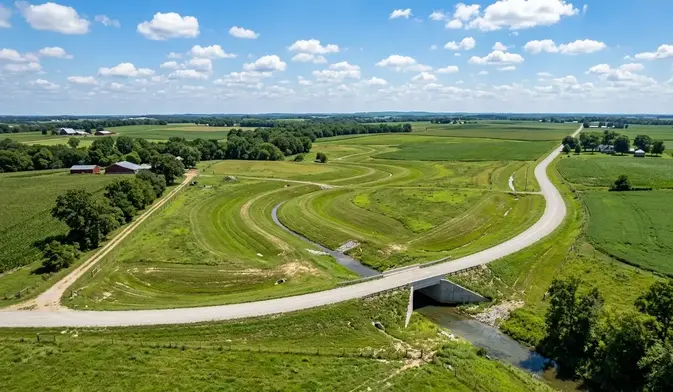
Effective grading and drainage systems must perform through every season, from spring saturation and summer downpours to fall maintenance conditions and winter freeze-thaw cycles common across North Missouri.
Need Help Solving A Drainage Problem?
Whether you're dealing with standing water, erosion, driveway washouts, or poor grading, we can assess your property and recommend an effective solution.
Get A Free QuoteFrequently Asked Questions About Grading & Drainage Solutions in North Missouri
Grading and drainage issues in North Missouri are often caused by heavy clay soils, flat terrain, and improper original land shaping. Over time, these conditions lead to standing water, driveway washouts, erosion, and foundation drainage problems. These FAQs cover the most common questions property owners have before starting a grading or drainage correction project.
- What does a full grading and drainage project include?
- A complete grading and drainage project includes reshaping land elevations, correcting slope direction, installing swales or drainage channels, adding or resizing culverts, correcting driveway crowning, and improving water runoff paths. The goal is to permanently control how water moves across your property.
- How do I know if my property has drainage problems?
- Common signs include standing water after rain, muddy or soft yard areas, water pooling near foundations, driveway rutting, erosion channels, and areas that never fully dry out. These issues usually indicate improper slope or blocked natural drainage paths.
- Do I need permits for drainage or culvert installation?
- In many North Missouri counties, permits may be required for culvert installation, ditch modification, or work that affects county road drainage. Requirements vary by location. We help determine what is needed and ensure the project follows local regulations.
- Can grading fix water in my basement or crawl space?
- Yes, in many cases. Proper grading directs water away from the foundation, reducing hydrostatic pressure and surface runoff that contributes to basement leaks. However, severe cases may also require foundation drainage systems or interior waterproofing solutions.
- What is a drainage swale and do I need one?
- A drainage swale is a shallow, engineered channel designed to safely carry stormwater across your property without causing erosion. Swales are commonly used on rural and residential properties where natural water flow needs to be redirected or controlled.
- How do you fix a washout or eroded driveway?
- We repair washouts by rebuilding the base material, correcting slope, improving compaction, and installing proper drainage structures like culverts or ditches. Without correcting water flow, driveway damage will continue to return after storms.
- Can you stop water from running onto my property from a neighbor or field?
- Yes. We can install diversion berms, swales, and grading adjustments that redirect incoming surface water. Each solution must be carefully designed to manage flow without creating issues for surrounding properties.
- How long does a grading and drainage project take?
- Small residential drainage corrections can take 1–2 days. Larger rural or agricultural grading projects may take several days depending on terrain, soil conditions, culvert installation, and weather. Wet conditions can extend timelines.
- Will grading damage my yard or landscaping?
- Grading is an earthmoving process, so some surface disruption is expected. However, we focus on precision shaping to minimize unnecessary disturbance and restore a clean, functional surface once drainage corrections are complete.
- Can you install or replace driveway culverts?
- Yes. We install properly sized culverts for residential driveways, farm entrances, and rural roads. Correct sizing and placement are critical to prevent clogging, flooding, and driveway collapse during heavy rainfall.
- What happens if drainage problems are not fixed?
- Over time, unresolved drainage issues worsen. Water erosion removes soil, weakens driveway bases, damages foundations, and creates larger runoff channels. Eventually, repair costs increase significantly compared to early correction.
- Can you fix standing water in fields or pastures?
- Yes. Agricultural drainage solutions may include surface grading, ditching, tile drainage support, and water redirection systems to improve field usability and prevent soil saturation in low areas.
- Do you work on both rural and residential properties?
- Yes. We handle everything from residential yards and driveways to large farms, acreage, and commercial sites. Each property is evaluated individually based on terrain, soil type, and drainage behavior.
- How do you determine the correct slope for drainage?
- We use elevation measurements, site grading analysis, and water flow patterns to design proper slope direction. Even small changes in grade can significantly impact how water drains across a property.
- How do I get an accurate grading estimate?
- The most accurate estimate comes from an on-site evaluation. We assess slope, soil conditions, drainage paths, access, culvert needs, and problem areas. Every property is different, and pricing depends on real site conditions.
- Can grading and drainage be done in winter?
- In many cases, yes. Frozen ground can sometimes improve access for heavy equipment, but extreme cold, snow, or saturated soil conditions may limit work. Each project is scheduled based on safe operating conditions.
- Do you offer long-term drainage solutions or just quick fixes?
- We focus on permanent solutions, not temporary fixes. That means correcting slope issues, improving runoff paths, and installing properly engineered drainage systems designed to perform long-term under North Missouri weather conditions.
- Can grading prepare my land for construction?
- Yes. Grading is often the first step in site development. We can prepare building pads, improve access roads, and establish proper drainage before construction begins to ensure long-term stability.
- How much does grading and drainage work cost in North Missouri?
- Costs vary based on property size, severity of drainage issues, amount of soil movement required, culvert installation, and site accessibility. Small drainage corrections may be relatively inexpensive, while large-scale regrading or farm drainage systems require detailed site evaluation for accurate pricing.
Ready to Fix Drainage Problems and Protect Your Property?
Whether you're dealing with standing water, erosion, muddy areas, driveway washouts, or poor site grading, we can identify the source of the problem and develop a long-term drainage solution.
Call now for a site evaluation, drainage assessment, and a clear plan to move water where it belongs.
Call (660) 371-5901